What is Bitumen 40/50: Bitumen 40/50+ uses and advantages!

Bitumen 40/50 is a standard penetration-grade product and a popular choice for insulating buildings and repairing road asphalt, particularly in hot climates. Iran E Trade is a reputable source for purchasing 40/50 bitumen. You can visit our website to buy 40/50 bitumen and learn more about its best prices. Additionally, you can read this article to learn more about the technical specifications and characteristics of 40/50 bitumen.

What is bitumen 40/50?

The right choice of bitumen for insulating buildings and road repairs is crucial, considering factors such as weather conditions and bitumen penetration degree. Bitumen 40/50 is harder than bitumen 85/100. Therefore, 40/50 bitumen is more suitable for hot climates or road surfaces with heavy traffic.

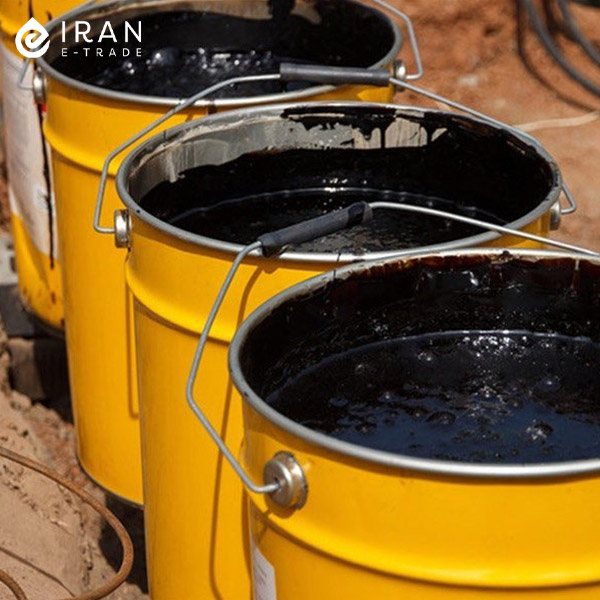
40/50 bitumen is a black, viscous substance produced from oil distillation. It has widespread use in various industries, including construction, road building, and surface waterproofing.

Technical specifications for bitumen encompass several factors, such as density, ductility, and softening point. Among these traits, bitumen’s penetration degree plays a significant role. Based on test results, 40/50 bitumen has a penetration grade of 4 to 5 mm. A higher penetration grade indicates softer bitumen, while lower penetration results in more rigid bitumen.

(For more information about price and use bitumen 50/70, refer to the article bitumen 50/70)

 bitumen 40/50

How is 40/50 bitumen produced?

Generally, bitumen is produced from the distillation of crude oil. The manufacturers produce bitumen 40/50 through a process known as vacuum bottom aeration. Specifically, vacuum bottom refers to the residue remaining in the distillation tower during vacuum distillation. When a vacuum bottom is exposed to air, cross-linking bonds form between its molecules. This process results in a thick, viscous, black material called bitumen.

(For more information about price and use bitumen 60/70, refer to the article bitumen 60/70)

How is 40/50 bitumen produced

40/50 bitumen technical specifications and features

Bitumen 40/50 exhibits excellent adhesion and is a good choice as a double-sided adhesive for street paving. Also, it has uses in roof sealing and scenarios where engineers need a pasty material with dual adhesive traits.

40/50 bitumen is a robust road bitumen with a low penetration degree. Therefore, it is valuable for making asphalt in tropical regions. In addition, this type of bitumen possesses thermoplastic properties, softening at high temperatures and becoming rigid at lower temperatures.

(For more information about price and use bitumen 70/100, refer to the article bitumen 70/100)

40/50 bitumen features

What are the uses of 40/50 bitumen?

For instance, 60/70 bitumen allows approximately 60 to 70 mm of permeability to the underlying rocks within 100 seconds. On the other hand, 40/50 bitumen permits about 40 to 50 mm of permeability in the same time frame. As a result, 40/50 bitumen is applicable for making regular asphalt, anti-moisture coatings and building insulation.

Bitumen 40/50 exhibits softening at higher temperatures and stiffening at lower temperatures. For this reason, 40/50 bitumen is well-suited for asphalt production in climates with significant temperature changes. In contrast to 60/70 bitumen, 40/50 bitumen has lower permeability.

(For more information about emulsion bitumen, refer to the article bitumen 60/70 What is Bitumen Emulsion)

 uses of 40/50 bitumen

Buying 40/50 bitumen

Oil is often called “the black gold” and bitumen is one of its valuable derivatives. If you want to buy bitumen 40/50, you can rely on Iran E Trade. You can connect with Iran E Trade experts through online chat, WhatsApp, telephone, or in-person visits. If you need 40/50 bitumen or any other type of penetration grade bitumen, you may contact our experts at Iran E Trade.

Bitumen exhibits a unique behavior: it is neither purely elastic nor viscous at ambient temperatures. Instead, it combines both characteristics, making it viscoelastic. If you are looking for a reliable supplier for various grades of bitumen, feel free to contact Iran Trade.

(Click to learn about Vacuum Bottom Bitumen.)

Buying 40/50 bitumen

Price of 40/50 bitumen

The Iran E Trade online platform provides bitumen prices from Iran oil refineries, streamlining trading activities for global bitumen traders. Our experts, who are in direct communication with bitumen producers, expedite the process of exporting bitumen. So, if you want to stay informed about the bitumen 40/50 price, you can visit the Iran E Trade website.

Price of 40/50 bitumen

Buying bitumen 40/50 from Iran E trade

Iran E Trade provides the opportunity to purchase bitumen at the best prices by connecting with the largest bitumen refineries in Iran. 40/50 bitumen is a good choice for road asphalt repairs in hot climates. To acquire bitumen 40/50, you can consult Iran E Trade, an esteemed authority with extensive experience in selling 40/50 bitumen.

We regularly update bitumen prices for your trading convenience, ensuring you stay informed of even the slightest fluctuations. For more information on bitumen pricing and purchase, visit the Iran E Trade website at https://iranetrade.com. You can also contact us through these numbers: 88981247 or 88991554.

purchase bitumen 40/50


reference: wikipedia

Bitumen Price

What is Bitumen 85/100: Bitumen 85/100+ uses and advantages!

Never underestimate the quality of asphalt and road surfaces! Poor road surfaces with low-quality asphalt can quickly develop cracks under heavy machinery, which results in uneven roads. These bumps can cause damage to the cars over time, increasing the risk of accidents. For this reason, road builders use bitumen with varying quality and penetration levels to construct roads. One such grade is bitumen 85/100. But what exactly is this type of bitumen, and how is it produced?

What is bitumen 85/100?

Bitumen 85/100 is a standard type of penetration bitumen which has 85 to 100 penetration degrees. Bitumen penetration grade 85/100 is valuable for its high penetration and softness, which makes it a preferable product for road construction and hot asphalt blending. The distinctive characteristics of 85/100 Bitumen are the results of a specialized manufacturing process. We will explain more about this process and the uses for this bitumen in this article from Iran E Trade.

 bitumen 85/100

How is 85/100 bitumen produced?

Every bitumen product is produced from crude oil. Producing 85/100 bitumen is the same as other penetration bitumen products. First, the manufacturers heat crude oil. Then, the lighter components of the crude oil rise to the top of the chamber, while the heavier components settle to the bottom.

Afterwards, manufacturers apply a procedure known as vacuum distillation to these deposits to extract any residue components. These residues are vacuum baton. In the next phase, the manufacturers blow hot air to it. At this stage, bitumen 85/100 will have its unique features. But what precisely are these characteristics and specifications?


Bitumen 85/100 specification and features

Every penetration-grade bitumen product has unique qualities and attributes. Therefore, bitumen 85/100 has a high viscosity and is composed of organic hydrocarbons. In this section, we will discuss some of its important characteristics.

(For more information about price and use bitumen 40/50, refer to the article bitumen 40/50)

Bitumen 85/100 features

1. The penetration grade

The penetration grade implicates the hardness or softness of bitumen. In the case of bitumen 85/100, this grade ranges from 85 to 100. The penetration grade indicates that a standard needle can penetrate bitumen by 85-100 mm. This penetration degree typically means that 85/100 bitumen is very soft. As a result, it is useful in projects like building roads and producing and repairing paving.

(For more information about price and use bitumen 60/70, refer to the article bitumen 60/70)

Bitumen 85/100 specification

2. The softening point

Generally speaking, the softening point is the highest temperature at which bitumen melts and loses its form. An essential feature of bitumen products is the softening point. The rationale is that it establishes the types of weather in which each bitumen product can endure without losing its form. The softening point for bitumen 85/100 is 41–49 °C which means it can still hold its shape at this temperature.

(Click to learn more about  Soft Bitumen.)

purchase of bitumen 85/100

3. Ductility

Ductility, which varies for each bitumen product, is the elasticity of the bitumen before it fractures. The ductility of bitumen 85/100 is 100 cm, which indicates good ductility. Bitumen with higher ductility will be more flexible and resilient to the pressure of vehicles and environmental factors.

(For more information about price and use bitumen 40/60, refer to the article bitumen 40/60)

sale of bitumen 85/100

4. Flash point

Bitumen products may ignite when exposed to flammable materials at specific temperatures Therefore, each bitumen has a certain flash point. In the case of 85/100 bitumen, this point is 250 °C which is high. Consequently, it shows that bitumen 85/100 does not combust at lower temperatures. As a result, engineers can effectively use it for road construction in hot climates.

(For more information about Cutback Bitumen, refer to the article What is Cutback Bitumen )

price of bitumen 85/100

What are the factors in bitumen 85/100 pricing?

Factors that influence the price of bitumen 85/100 include the supply and demand in the market. For instance, if the demand for 85/100 bitumen exceeds its supply, its price will increase. Furthermore, political factors, such as sanctions on bitumen trade, and bitumen’s features can also impact its price. If you are considering trading 85/100 bitumen, it is essential to understand these factors that affect its pricing.

One significant factor is the price of crude oil, as bitumen is derived from it. Therefore, any fluctuations in crude oil prices will directly affect the price of bitumen. Another factor to consider is the production and transportation costs of bitumen incurred by companies and the production plants, which impact its price.

 factors in bitumen 85/100 pricing

Buy Bitumen 85/100 from Iran Trade

Each bitumen possesses unique features that determine its specific application. Bitumen 85/100 is a soft bitumen suitable for road construction in colder regions. If you want to purchase this particular type of bitumen or are involved in bitumen trade, you can visit the Iran E Trade website for pricing details. With our extensive experience in Bitumen exports, we can guide you on various bitumen-related matters, including its pricing.

Buy Bitumen 85/100


reference: wikipedia

Bitumen Price

What is Bitumen 60/70: Bitumen 60/70+ uses and advantages!

One of the most popular products from oil refineries is bitumen 60/70. This product has a standard penetration grade and is used in the industry for asphalt making and insulation. The penetration grade (softness and stiffness), among many other factors, influences the selection of different bitumen products for various uses and climates. Therefore, in this Iran E Trade article, we will explain 60/70 bitumen features and the variables influencing its pricing. You can purchase 60/70 bitumen by contacting Iran E Trade, a reputable source for supplying bitumen penetration grade 60/70.

Bitumen 60/70

60/70 bitumen suppliers market this product as semi-hard bitumen. This is because the test results for bitumen 60/70 indicate that its penetration degree is between 6 and 7 mm. The higher the penetration grade, the softer the bitumen. However, if the penetration grade is lower, the bitumen is harder.

Bitumen is a hydrocarbon in water that is thick, sticky, and impenetrable. This dense, dark material is 87% carbon, 11% hydrogen, and 2% oxygen. The manufacturers produce bitumen via oil distillation. The grade of penetration, viscosity, flash point, weight loss (at varying temperatures), flexibility, purity, and softness are the factors that determine the classification of bitumen. The penetration grade is one of the most significant characteristics of bitumen, such as 60/70 grade in bitumen penetration grade 60/70. (For more information refer to the article  What is Bitumen)

The engineers use a 100 gr standard needle to test the bitumen penetration grade at 25 °C in 5 seconds. The harder the bitumen, the less the needle penetrates it. Engineers use bitumen penetration grade 60/70, which is sold as semi-hard bitumen, in road building and construction projects.

Bitumen 60/70

How is bitumen 60/70 produced?

With a 6–7 mm penetration degree, bitumen penetration grade 60/70 is semi-hard and heavy. Therefore, it is an ideal product for use in road construction and maintenance.

Bitumen is Iran’s first conventional petrochemical product and a pasty-shaped substance created through the distillation of crude oil. Before the discovery of oil, the Sassanid administration used bitumen for tarring its military weapons. Centuries later, during the Qajar reign, a family in Shushtar produced and even exported bitumen.

Bitumen is one of the first and most consumed petroleum products. The bitumen manufacturers produce bitumen 60/70 through a procedure known as vacuum baton aeration. Vacuum baton is the residue of crude oil distillation.

(For more information about price and use bitumen 70/100, refer to the article bitumen 70/100)

How is bitumen 60/70 produced

The advantages and disadvantages of using 60/70 bitumen

In warm climates, bitumen 60/70 is a good choice for insulation. This is because, at greater temperatures, 60/70 bitumen is less prone to developing grooves, breaking, or deformation. However, If this kind of bitumen is applied in colder climes, it could become overly rigid and split.

(For more information about price and use bitumen 85/100, refer to the article bitumen 85/100)

The advantages 60/70 bitumen

60/70 bitumen specifications and features

Bitumen 60/70 is a hard bitumen useful for roads with low penetration grade. This particular type of bitumen is ideal for use in tropical climates. It also has thermoplastic qualities that make it soft in high temperatures and hard in low temperatures.

(For more information about price and use bitumen 50/70, refer to the article bitumen 50/70)


60/70 bitumen specifications

60/70 bitumen uses

Since bitumen 60/70 softens at high temperatures and hardens at lower temperatures, it is a good choice for asphalt production in regions with significant temperature fluctuations. 60/70 bitumen versatility makes it suitable for various applications such as general asphalt, building insulation, and waterproofing.

(For more information about price and use bitumen 40/50, refer to the article bitumen 40/50)

60/70 bitumen uses

Buying 60/70 bitumen

Bitumen is a material that shows both elastic and viscous properties at ambient temperature, making it viscoelastic. If you want to purchase bitumen 60/70, Iran E Trade is your ideal supplier.

Iran E Trade offers various communication channels such as online chat, WhatsApp, phone, and face-to-face meetings to facilitate the purchase of bitumen 60/70 or any other type of bitumen product. You can also contact our experts at Iran E Trade to purchase bitumen.

(Click to learn more about Anionic Bitumen Emulsion.)

Buying 60/70 bitumen

Factors influencing the price of 60/70 bitumen

Bitumen 60/70 is a penetration-grade product with many uses in road construction and asphalt production. Factors influencing the pricing of 60/70 bitumen include crude oil prices, changes in foreign currency rates, supply and demand, and the economic and political landscape of the countries involved in bitumen import and export.

(For more information about price and use bitumen 60/90, refer to the article bitumen 60/90)

Factors influencing the price of 60/70 bitumen

Bitumen 60/70 price

Iran E Trade online platform facilitates the activities of the global bitumen market by offering prices of bitumen refineries in Iran. Experts with direct communications to bitumen producers ensure quick access to export opportunities. Visit Iran E Trade website for instant pricing of 60/70 bitumen. Bitumen 60/70 is mainly used in road construction and repair. For more information on bitumen pricing, visit https://iranetrade.com or contact 88981247 or 88991554.

Bitumen 60/70 price


reference: wikipedia

Bitumen Price

What is Bitumen 60/90: Bitumen 60/90+ uses and advantages!

Bitumen is a thick, dark, and shiny substance primarily produced from the distillation of crude oil. However, you can also find its natural reserves in nature. Bitumen has strong adhesive and waterproof properties. These traits make it a valuable material in several industries, such as road building, construction, and insulation. Various types of bitumen exist, with bitumen 60/90 being one of them. In this article, we will explain more about this product, its specifications, use and price.

What is Bitumen 60/90?

60/90 bitumen is a product of distilling crude oil in the distillation towers. Bitumen 60/90 is ideal for making asphalt for roads in temperate climates. Therefore, most of its uses are in road construction and paving. Furthermore, it has other uses in various industrial sectors.

Due to its exceptional resistance to temperature changes and strong adhesion, it is a reliable product for different projects. Iran E Trade is a reputable platform for buying various types of bitumen, including 60/90 bitumen, at affordable prices.

 Bitumen 60/90

Bitumen 60/90 specification and features

Bitumen 60/90 is a popular product in road building and construction. The numerical values 60 and 90 signify the penetration grade of this bitumen. Therefore, the grades 60-90 indicate bitumen’s level of hardness or softness. The lower the penetration grade of bitumen, the harder it is. However, a higher penetration grade means that the bitumen is softer. However, what do you know about 60/90 export bitumen specifications?

Bitumen 60/90 specification

Bitumen penetration grade

Bitumen 60/90 has a penetration grade of 60-90 hundredth of millimeters at ambient temperature. This grade shows bitumen’s hardness, which is different based on factors such as penetration degree, location, and specific application.

(Click to learn about Types of Construction Bitumen.)

The penetration bitumen products begin to soften at a certain temperature range, based on their properties and degree of penetration. In the case of 60/90 bitumen, its softening begins at temperatures between 49 and 56 °C.

(For more information about What is Penetration Bitumen , refer to the article Penetration Grade Bitumen )

Bitumen penetration grade

High adhesion

The 60/90 bitumen exhibits excellent adhesion properties, ensuring a durable and stable asphalt mix. Additionally, bitumen 60/90 has a flash point of 230°C (450°F). This trait makes this bitumen safe to use considering the ignition risks during storage and transportation.

(For more information about price and use bitumen 80/100, refer to the article bitumen 80/100 )


 advantages Bitumen 60/90

Viscosity

Another trait of 60/90 bitumen is its viscosity. Bitumen 60/90 has good viscosity levels at high temperatures, facilitating its effective incorporation into asphalt mixtures. Moreover, the viscosity of 60/90 bitumen at lower temperatures ensures its required flexibility to prevent cracking. Such characteristics render 60/90 bitumen ideal for regions with drastic temperature changes.

(For more information about price and use bitumen 40/50, refer to the article bitumen 40/50 )


Bitumen 60/90 features

60/90 bitumen conditions of use

One notable feature of 60/90 bitumen is its high flexibility and low-temperature elasticity. This trait enhances the adhesion between aggregates in asphalt mixtures, resulting in a longer lifespan for the asphalt.

Bitumen 60/90 is a type of bitumen that has an average degree of penetration and various applications such as road construction, insulation, and the building industry. Bitumen penetration grade 60/90 physical and chemical traits determine its conditions of use.

These properties enable the bitumen to perform optimally under specific circumstances. Bitumen penetration grade 60/90 is suitable for regions with moderate to warm climates due to its penetration degree. While it can still have good flexibility at lower temperatures, it may not perform as well in cold climates.

(For more information about bitumen, refer to the article What is Bitumen )

60/90 bitumen conditions of use

Uses of 60/90 bitumen

Because of its unique physical and chemical properties, bitumen 60/90 has various applications. Its penetration grade makes it ideal for construction projects, road paving, asphalt, surfacing roofs, bridges, and other structures. Additionally, engineers use 60/90 bitumen for building humidity insulation in buildings and tunnels. Moreover, engineers also use this type of bitumen for repairing damaged surfaces. However, its primary use is on roads with heavy traffic loads.

(Click to learn about What is Bitumen Spray.)

Uses of 60/90 bitumen

How is 60/90 bitumen produced?

Like other types of bitumen, the manufacturers produce bitumen 60/90 from crude oil distillation in a refinery. The production process of this particular bitumen involves several steps, which we will briefly discuss below:

1. Distillation of crude oil: During this stage, crude oil is subjected to high temperatures, causing its different components to separate. The heavier portions settle at the bottom of the distillation tower.

2. Vacuum distillation: In this stage, the heavy material is subjected to low pressure, which allows its components to separate further. The vacuum residue is also separated during this process.

3. Oxidation or air-blowing process: At this stage, the air is blown into the heavy material, which increases the bitumen’s softening point and reduces its penetration degree. The engineers carefully control the duration of the blowing process to achieve the desired traits of 60/90 bitumen.

(For more information about price and use bitumen 40/60, refer to the article bitumen 40/60 )

How is 60/90 bitumen produced?

Safety Tips for using Bitumen 60/90

If you intend to use bitumen 60/90, then you should follow its safety precautions carefully for transportation, storage and use. These precautions include implementing protective gear for workers, maintaining temperature control, good ventilation, etc. By observing these guidelines, you can decrease the risk of environmental damage and pollution caused by 60/90 bitumen use.

Safety Tips for using Bitumen 60/90

Safe transportation of bitumen 60/90

Proper packaging is essential for the safe transportation of bitumen 60/90 to avoid any leakage or damage. For this purpose, metal drums or specialized bags are the best choice. Furthermore, maintaining the appropriate temperature for bitumen during transportation is crucial to prevent its excessive solidification or liquefaction.

(For more information about price and use bitumen 85/100, refer to the article bitumen 85/100 )

Safe transportation of bitumen 60/90

Safe storage of bitumen 60/90

If you wish to purchase bitumen 60/90, you should store this product away from any source of heat and flammable materials. Additionally, the storage area should have a proper ventilation system to avoid the buildup of flammable vapors. Regular inspections of the bitumen reservoirs and storage facilities are also necessary to promptly identify any leaks or damages to the tanks.

Safe storage of bitumen 60/90

Safe use of bitumen 60/90

When using bitumen 60/90, workers should wear suitable protective gear such as heat-resistant gloves, goggles, and masks. Also, the workers should closely monitor the temperature of the bitumen while in use to prevent any risks of burning or other potential dangers. Typically, engineers use 60/90 bitumen at temperatures of 150 to 170 °C.

(For more information about price and use bitumen 60/70, refer to the article  bitumen 60/70 )

Safe use of bitumen 60/90

Buying 60/90 bitumen

Furthermore, you may also need to compare the prices of 60/90 bitumen from different suppliers to purchase it at a reasonable price. Lastly, you can thoroughly review the terms of purchase, payment, shipping methods, and product delivery to avoid any potential issues in the future. Iran E Trade, is a trusted source for purchasing 60/90 bitumen. Therefore, we can offer high-quality products with guaranteed quality to our customers.

When purchasing bitumen 60/90, you should consider various factors to obtain a suitable and high-quality product. For instance, it is better to buy from reputable sales centers that specialize in selling 60/90 bitumen products. Purchasing from valid sources ensures product quality. You should also accurately check the bitumen’s specifications to ensure it meets the required terms of use and application.

(For more information about price and use bitumen 70/100, refer to the article bitumen 70/100 )

Buying 60/90 bitumen

Bitumen 60/90 price

Furthermore, bitumen prices are closely related to fluctuations in oil prices. As crude oil price rises or falls, it directly influences the price of different types of bitumen. In conclusion, the price of 60/90 bitumen varies among different manufacturing companies. However, for the best shopping experience, you can contact Iran E Trade.

The price of bitumen 60/90 depends on various factors. These factors include the pricing strategies of different companies. For example, famous bitumen-producing companies that uphold higher quality standards tend to set higher prices for their products. Also, market conditions such as supply and demand, currency rates, and economic circumstances can affect the price of 60/90 bitumen. For instance, when the supply is less than the demand, the price of bitumen increases.


Bitumen 60/90 price

Buying bitumen with Iran E Trade

Iran E Trade provides the opportunity to purchase bitumen at the best price by establishing connections with the largest bitumen refineries in Iran. We regularly update the bitumen prices to facilitate your trading experience, ensuring that you are aware of the slightest fluctuations in its pricing. For your convenient access to information about the price and purchase of bitumen, please visit our website at https://iranetrade.com or contact us by these numbers for additional guidance: 88981247 or 88991554.

60/90 export bitumen


reference: wikipedia


Bitumen Price

What is Bitumen 40/60: Bitumen 40/60+ uses and advantages!

Bitumen is a dark, viscous material that engineers mostly use for insulation and asphalt construction. Various types of bitumen are selected based on their specific properties for use in different weather conditions. An important characteristic of bitumen is its permeability, which experts usually grade bitumen products by it. In this article of Iran E Trade, we will explain more about bitumen 40/60, its production process, traits and uses.

Bitumen 40/60

Despite its black and sticky appearance, bitumen exhibits distinct characteristics that categorize its products into different types. Among these features, bitumen’s degree of penetration plays a crucial role. Penetration degree directly influences the hardness and softness of bitumen. The penetration index indicates which bitumen product has more longevity and flexibility for different climates.

As a general rule, lower penetration corresponds to harder bitumen, while higher penetration results in softer bitumen. Penetration grade refers to the extent of bitumen permeability into the earth’s surfaces and layers. Bitumen 40/60, with a penetration grade of 4 to 6 mm in 5 seconds, falls on the stiffer end of the spectrum. Therefore, engineers usually use this type of bitumen for road paving, construction, and repairs in hot climate regions.

(Click here to read more about Jumbo Bag Bitumen.)

Bitumen 40/60

How is 40/60 bitumen produced?

The oxidation rate of the vacuum residue affects the permeability of bitumen. 40/60 bitumen has a penetration depth ranging from 40 to 60 mm and a softening point between 48 and 56 °C. This type of bitumen exhibits thermoplastic properties similar to synthetic resin materials. As a result, it becomes more rigid when heated and softer in cold weather.

Manufacturers produce pure bitumen from the distillation of crude oil during the aeration process of vacuum residue. Vacuum residue refers to the material deposited in the vacuum distillation tower. When exposed to air and the creation of cross-linking bonds between molecules, the vacuum residue transforms into a sticky black substance known as bitumen 40/60.

(For more information about Natural Bitumen, refer to the article What is gilsonite bitumen )

How is 40/60 bitumen produced

40/60 bitumen features and specifications

Various types of bitumen, such as bitumen 40/60, have undergone extensive tests following global standards. Their properties, including density at 25 °C (laboratory temperature), penetration grade, softening point, ductility, weight loss during heating, penetration degree after heating, flash point, and solubility in trichloroethylene, have all been meticulously documented.

(For more information about price and use bitumen 80/100, refer to the article bitumen 80/100)

40/60 bitumen specifications

What are the uses of 40/60 bitumen?

Bitumen 40/60 is a standard product that engineers mostly use in road construction and asphalt applications. Bitumen with this penetration grade exhibits thermoplastic properties, making it soft at high temperatures and hard at low temperatures. This temperature-viscosity relationship is critical for determining bitumen’s performance parameters such as adhesion, durability, and the suitable temperature for applying bitumen.

(For more information about price and use bitumen 70/100, refer to the article bitumen 70/100)

 uses of 40/60 bitumen

Buying 40/60 bitumen

On the Iran E Trade website, you can assess bitumen 40/60 and various other bitumen products by evaluating their quality and pricing offered by different companies and ports. It allows you to purchase the best-quality 40/60 bitumen at the best price. Iran E Trade streamlines your bitumen trading experience and helps you contact reliable suppliers for buying and selling 40/60 bitumen. To consult with Iran E Trade experts, you have different options: utilize online chat platforms, reach out via WhatsApp, or we can arrange face-to-face meetings with you.

(For more information about price and use bitumen 60/90, refer to the article bitumen 60/90)

Buying 40/60 bitumen

40/60 bitumen price

To support traders in the global bitumen market, Iran E Trade has established an online platform. This platform offers real-time export bitumen prices determined by Iran’s bitumen refineries. Our experts, who maintain direct connections with bitumen producers, streamline the process of exporting bitumen, ensuring its efficiency and timely transactions. Stay informed about the spot price of bitumen 40/60 and other products by visiting the Iran E Trade website.

(For more information about bitumen supply and export current price, refer to the article Bitumen Export )

40/60 bitumen price


reference: wikipedia

Bitumen Price

What is Bitumen 80/100: Bitumen 80/100+ uses and advantages!

Bitumen is a material that manufacturers produce from crude oil. Because of its unique physical and chemical properties, it has many uses in various industries such as building roads, construction, insulation, etc. Different types of bitumen also include penetration grade bitumen with various penetration degrees. Therefore, in this article, we decided to explain bitumen 80/100, its price and important tips for its purchase. Iran E Trade is a reputable source for selling 80/100 and other types of bitumen and will provide high-quality and standard products for sale.

Bitumen 80/100

Buying 80/100 bitumen is a good choice for increasing the efficiency and durability of various projects. This is because 80/100 bitumen has unique features and is efficient in many projects. Bitumen penetration grade 80/100 is also a suitable choice for road construction, insulation, production of bitumen products, etc.

Bitumen 80/100 is a type of penetration grade bitumen classified based on its degree of penetration at 25°C. The numbers 80 and 100 indicate the penetration depth of the standard needle into the bitumen. In this case, the engineers sink the needle into the bitumen at 25°C between 0 and 100 dm. 80/100 bitumen is relatively soft and viscous, and its unique features make it suitable for road construction, making asphalt, insulation, etc.

(Click here to read more about the applications and uses of bitumen in various industries.)

 Introduction Bitumen 80/100

How is 80/100 bitumen produced?

The manufacturers produce 80/100 bitumen with complete precision and supervision so that the final product has the technical characteristics necessary for various applications.

Bitumen 80/100 is produced by refining crude oil in the distillation towers. This process includes several steps that are:

  • Distillation of crude oil: At this stage, the manufacturers expose crude oil to high temperatures in the distillation tower. This process separates crude oil’s lighter components such as gasoline, oil, gas, etc. Then, the heavy residue from the distillation process sediments as on the bottom of the distillation tower. This residue is the vacuum baton.
  • Vacuum distillation: In the next phase, the manufacturers subject the vacuum baton to low pressure. Therefore, the base bitumen and other byproducts are separated.
  • Blowing air into bitumen: At this stage, air is blown into the base bitumen which will cause the bitumen’s viscosity to increase and its chemical traits to change. The duration of air blowing and its temperature are well adjusted to ensure that the quality of the 80/100 bitumen would be optimal.
  • Adding additives: At this stage, The manufacturers may add additives to improve the properties of bitumen, such as its flexibility, adhesion or resistance to atmospheric conditions.

(For information about price and use bitumen 70/100, refer to the article  bitumen 70/100)

How is 80/100 bitumen produced

Specifications and features of 80/100 bitumen

80/100 bitumen is a penetration-grade bitumen that has unique properties. Therefore, engineers use it in different construction, industrial and road construction projects. That is why If you want to buy 80/100 bitumen, you should be familiar with its technical specifications:

  • Penetration degree: Bitumen 80/100 has a penetration grade of 80-100 dm in temperature of 25°C. (A higher grade implies softer bitumen.)
  • Softening point: 80/100 bitumen softens at the temperature of 40-50 °C.
  • Viscosity: This trait shows the resistance of bitumen to flow which can vary depending on the production conditions and raw materials.
  • Weight loss: This factor shows bitumen’s weight loss after heating which is less than 1% in 100/80 bitumen.
  • Flashpoint: 80/100 bitumen is flammable at a minimum temperature of 230°C.

(For more information about price and use bitumen 60/90, refer to the article bitumen 60/90)

Specifications 80/100 bitumen

Important features of 80/100 bitumen

The important features of 80/100 bitumen include the following:

  • Flexibility: Bitumen 80/100 has good flexibility due to its softness and can be suitable for various uses.
  • Adhesion: 80/100 bitumen has good adhesion. Accordingly, it can adhere well to various materials. That is why it is very suitable for road construction and insulation.
  • Waterproof: The high resistance of 80-100 bitumen to water penetration makes this bitumen a good choice for insulation.
  • Thermal stability: 80/100 bitumen resists temperature changes well.
  • Durability: Because of its good physical and chemical traits, 80/100 bitumen has a long life span.

(For more information about bitumen, refer to the article What is Bitumen )

 features of 80/100 bitumen

What are the uses of 80/100 Bitumen?

Bitumen 80/100 has unique physical and chemical traits. Because of this, it has diverse uses in different Industries. Before you buy 80/100 bitumen you should know more about its uses. To buy bitumen penetration grade 80/100 and other types of bitumen, you can contact Iran E Trade.

  • Road construction and repair: Engineers can use 100/80 bitumen for covering the surface of roads or repairing asphalt surfaces.
  • Insulation: Bitumen penetration grade 80/100 is a suitable insulation material for roofs and roofs. Also, it can be used for insulating underground structures to prevent water and moisture infiltration.
  • Waterproofing and bituminous products: 80/100 bitumen can be used to make insulating materials. In addition, this bitumen is good for use in producing products such as mastic, sealant tape, etc.
  • Coating: Engineers can use 80/100 bitumen to cover pipes, concrete structures, etc. to resist water and moisture.
  • Construction and maintaining offshore structures: Engineers can use 80/100 bitumen in docks and offshore bridges because it is also very resistant to salt water and harsh conditions.

(For more information about price and use bitumen 40/60, refer to the article  bitumen 40/60)

 uses of 80/100 Bitumen

Buying bitumen 80/100

Because it has numerous applications and uses, buying bitumen 80/100 is worthwhile. However, in buying 80/100 bitumen, you should consider some points ensuring the quality of the product.

When you want to buy 80/100 bitumen, make sure that the product is in accordance with national and international standards. In addition, you should also check the technical specifications of the bitumen correctly to make sure that it fits your needs.

Different manufacturers sell 80/100 bitumen. That is why it is necessary to refer to reputable sellers who have the necessary certificates and licenses to buy 80/100 bitumen. Finally, check the terms of packing and shipping of bitumen as well as its payment and contract terms. You can contact Iran E Trade to buy 80/100 bitumen.

(For more information about Cutback Bitumen, refer to the article What is Cutback Bitumen )

Buying bitumen 80/100

Bitumen 80/100 price

80/100 bitumen is a penetration-grade bitumen which engineers commonly use in road construction and asphalt production. This type of bitumen is suitable for preparing hot asphalt mix and road paving due to its high resistance at different temperatures and good adhesion. The price of 80/100 bitumen depends on various factors, including crude oil prices, currency rate fluctuations, supply and demand, economic and political conditions of each country, etc.

For accurate information about the price of bitumen 80/100 and other bitumen products, you can contact Iran E Trade. We in Iran E Trade participate in selling 80/100 bitumen and other types of bitumen and provide high-quality products for our customers.

Bitumen 80/100 price


reference: wikipedia

Bitumen Price

What is Bitumen 70/100: Bitumen 70/100+ uses and advantages!

Bitumen is a petroleum product with traits such as waterproofness and high adhesion. That is why many use this product in roads, insulation and construction. There are different types of bitumen, each with specific characteristics in terms of penetration degree, softness and viscosity. In the following article, we will explain more about bitumen 70/100, the factors affecting its price, and the characteristics and uses of this bitumen. If you want to purchase 70/100 bitumen, you can refer to Iran E Trade, a reputable source for selling high-quality 70/100 bitumen.

What is bitumen 70/100?

Because of its physical and chemical traits, 70/100 bitumen is suitable for road construction, insulation, etc. Furthermore, because bitumen 70/100 has a high penetration grade, softness and good viscosity, it is suitable for use in construction and industrial projects.

Bitumen penetration grade 70/100 has many uses in road, insulation and construction industries. The penetration degree of this bitumen shows that 70/100 bitumen is relatively soft. This feature makes 70/100 bitumen a good choice for use in cold climates and low-temperature areas.  The softening point of 70/100 bitumen is between 40 and 50 °C. Therefore, engineers can use 70/100 bitumen in temperate and cold temperatures without any risk of cracking. As a result, 70/100 bitumen has most of its uses in asphalt and road construction, insulation, coating steel structures, repair and maintenance of cracks and gaps in asphalt, etc.

(For information about What is Penetration Bitumen , refer to the article Penetration Grade Bitumen) Introduction bitumen 70/100

How is 70/100 bitumen produced?

The manufacturers produce bitumen 70/100 by refining crude oil. This process consists of several main steps that we will explain below:

  1. Crude oil distillation: First, the manufacturers place crude oil in the distillation tower and expose it to high temperatures. Then, its lighter components (such as gasoline, oil, etc.) are separated and heavy residue remains at the bottom of the tower. These residues are then transferred to the vacuum distillation tower to separate the oil’s heavier materials without thermal decomposition. The results of this process include base oils and vacuum batons.
  2. Air blowing or oxidation: The manufacturers transfer the vacuum baton from the previous phase to the air-blowing unit. Blowing air or oxidation increases bitumen’s softening point and reduces its penetration grade. Therefore, to produce 70/100 bitumen with the desirable traits, the temperature and duration of the air-blowing process are precisely controlled.
  3. Adding additives to bitumen: In some cases, the manufacturers add additives to bitumen including polymers, oils or stabilizers to improve its characteristics. For instance, these traits and characteristics can be better adhesion or resistance to different weather conditions.
  4. Cooling: After the air-blowing process, the manufacturers cool the bitumen to make it more convenient for transportation.
  5. Bitumen quality control: At this stage, the experts test the final product of bitumen to ensure it meets the desired standards.

(For more information about price and use bitumen 40/60, refer to the article on bitumen 40/60 )

How is 70/100 bitumen produced

Technical specifications and traits of 70/100 bitumen

Bitumen 70/100 has its distinct characteristics. Therefore, engineers can use it in specific conditions. 70/100 bitumen has a few technical specifications and traits that are:

  • Penetration grade: 70/100 bitumen has a penetration grade of 70-100 dm at 25 °C.
  • Softening point: The softening point for this bitumen is 40-50 °C.
  • Viscosity: 70/100 bitumen viscosity can vary depending on the production conditions and raw materials.
  • Brittleness: The temperature at which 70/100 bitumen becomes brittle is usually less than -10°C.

(For more information about bitumen supply and export current price, refer to the article Bitumen Export)

Technical specifications 70/100 bitumen 

Important features of 70/100 bitumen

Some of the traits of 70/100 bitumen are the following::

  • High adhesion: 70/100 bitumen has a strong adhesion. As a result, this trait makes 70/100 bitumen adhere to materials and create a stable and durable layer.
  • Flexibility: Bitumen 70/100 has good flexibility and is very resistant to cracking. This feature makes this bitumen suitable for use in cold areas with extreme temperature changes.
  • Waterproof: 70/100 bitumen has waterproof properties and can function well as a moisture insulator in roofing and underground structures.
  • Highly stable: 70/100 bitumen products are resistant to atmospheric and environmental factors and show good durability over time.
  • Ease of use: The viscosity of 70/100 bitumen means that workers can distribute and apply it on roads at different temperatures.

(For more information about price and use bitumen 80/100, refer to the article bitumen 80/100)

features of 70/100 bitumen

Bitumen penetration grade 70/100 uses

70/100 bitumen has different uses. However, due to its adhesion, flexibility and high resistance to water and different atmospheric conditions, it is one of the most popular types of bitumen in the construction industry.

Bitumen 70/100 has many uses. Some of the main applications of this bitumen include the following:

  • Road construction and asphalt: 70/100 bitumen products are mostly sold for the construction and repair of roads and runways. This bitumen has high adhesion and flexibility, which makes it suitable for asphalt mixtures.
  • Insulation: Engineers also use 70/100 bitumen as moisture insulation in roofs or underground structures.
  • Coating: Engineers can use 70/100 bitumen to cover and insulate fluid storage tanks or pipes and metal structures to prevent corrosion and rust.
  • Maintenance: 70/100 bitumen is also a good choice to repair cracks in the asphalt surface of roads.

(Click here to read more about What is Ready Bitumen.)

Bitumen 70/100 uses

Buying 70/100 bitumen

To buy 70/100 bitumen, you have to consider different factors. These factors include your use of bitumen, technical specifications and choosing the right seller. By following these tips, you can be sure of choosing a quality product. Iran E Trade is a well-known source for selling 70/100 bitumen and provides you with a high-quality product at reasonable prices.

One of the important points in buying 70/100 bitumen is first considering your needs, and then choosing the suitable bitumen. For example, the penetration degree of bitumen 70/100 makes it ideal for use at low temperatures. However, for temperate or warm climates you should purchase another grade of bitumen. Various companies sell 70/100 bitumen. Therefore, it is crucial to choose a reputable and long-established supplier that has the necessary licenses and provides you with the right product. Buying 70/100 bitumen from a reputable seller means obtaining a quality product that meets the required standards and has been subject to quality control.

(For more information about Bitumen , refer to the article What is Bitumen ) Buying 70/100 bitumen 

Bitumen 70/100 price

Several factors affect the pricing of 70/100 bitumen including currency rate, supply and demand, type of packaging, shipping method, etc. Some of these factors are:

  • Crude oil price: The price of 70/100 bitumen depends on the price of crude oil. The increase in crude oil price also increases the price of bitumen products.
  • Production costs: The costs of producing bitumen 70/100 and additives that are added to improve the quality of bitumen will increase the price of 70/100 bitumen.
  • Political and economic conditions: Economic and trade sanctions can cause price fluctuations in the price of 70/100 and other types of bitumen.
  • Supply and demand: An increase in demand usually causes an increase in the price of 70/100 bitumen.
  • Packaging and shipping costs: Transportation fees affect the final price of bitumen. The type of packaging and its quality will also change the price.
  • Currency rate: Changes in currency rates can affect the price of bitumen. In general, the increase in the currency rate will also increase the price of bitumen.
  • Bitumen 70/100 price

Buying Bitumen with Iran E Trade

With direct access to Iran’s largest bitumen refineries, Iran E Trade provides you with the opportunity to purchase bitumen at the best price. For your trading convenience, we update the price of bitumen regularly, and you will be notified of even the slightest changes in its pricing. Visit https://iranetrade.com for more details about bitumen 70/100 prices and purchase, or call 88981247 or 88991554 for additional assistance.

purchase Bitumen70/100

reference: wikipedia


Bitumen Price

Bitumen Export: bitumen supply and export current price

Given that road construction is a part of the infrastructure sector in any country, petroleum products used in road construction are very important. One of these products is bitumen. Bitumen has many uses in the road construction industry for building roads. Also, bitumen is widely used in buildings for making roof insulators. Therefore, bitumen is a widely used substance in the world and because of its wide usage, the production of export bitumen in Iran has increased since the demand for it is high. But do you know what the types of exported bitumen are? Or which countries does Iran export bitumen to? Stay with us as we explain more about bitumen export and bitumen export price in this article.

What is bitumen export?

As we explained in the previous paragraph, bitumen is a widely used substance in the world. Therefore, it is natural for different countries to use bitumen for road and house construction. As a result, countries that can produce bitumen can make billions of profits by selling it to other countries.

Therefore, exported bitumen is bitumen that bitumen exporting countries export to other countries. Iran is also one of the largest producers of bitumen in the Middle East. If you are interested in knowing bitumen export prices, you can visit the IranETrade website.

What is bitumen export?

What are the types of bitumen export?

Bitumen is generally produced through various processes. As a result, these different processes also produce a variety of bitumen products. In Iran, various bitumen products are exported to other countries. For example, one of them is petroleum bitumen, which is obtained by distilling petroleum.

Another type of bitumen is natural bitumen which exists in the earth’s natural resources. Also, there is blown bitumen, which bitumen manufacturers produce by blowing air into bitumen at high temperatures.

Other bitumen products are cutback and emulsion bitumen, which are produced by mixing bitumen with solvents and applying the emulsion process to bitumen. If you are interested in knowing the bitumen export price for each of these types of bitumen, you can contact the IranEtrade bitumen export group.

For more information about emulsion bitumen, refer to What is Bitumen Emulsion .

Types of penetration-grade bitumen

The penetration grade of bitumen refers to the hardness of the bitumen, which experts evaluate using a laboratory testing process. There, they grade the bitumen based on its hardness. Different grades of bitumen have varied features, and their applications are also different.

Among the bitumen products, penetration-grade bitumen is among the most popular. One of the most common types of bitumen grading is bitumen 60/70. This bitumen is a good choice for covering roads.

(Click to read more about types of bitumen.)

The price of export bitumen 60/70 varies depending on its manufacturer and the fluctuations in the price of petroleum. Bitumen 60/90 is another type of bitumen that is mostly used for producing hot asphalt mix for roads.

Bitumen 60/90 manufacturers determine their bitumen 60/90 price, which varies according to the price of petroleum. Bitumen 85/100, like bitumen 60/90, is also used to produce hot asphalt mix.

Furthermore, road builders use it to build road bases. Another type is bitumen 50/70 which is mainly used in the production of bituminous mixtures for the construction of road surfaces, airport runways, sidewalks, race tracks, and landing platforms.

Bitumen 80/100 also has a similar application to bitumen 85/100, the main use of which is the production of hot asphalt. To find out more about bitumen export price for 60/70, 50/70, 85/100, and 80/100 grades, contact IranETrade company.

Types of penetration-grade bitumen

Which countries produce the largest amounts of bitumen?

Bitumen is one of the highest-selling products in the world. Therefore, many countries buy and sell bitumen. According to the 2016 data, China produced 2 billion and 17 million tons of bitumen, which makes it the largest producer of bitumen in the world.

(Click to find out about the online bitumen price.)

After China, the United States, with an annual production of 1 billion and 97 million tons of bitumen, ranks second in terms of producing the highest amounts of bitumen.

After the United States, Russia and India are ranked in the 3rd and 4th place, with the production of more than 76 and 51 million tons of bitumen, respectively. In fifth place is South Korea, which produces 50 million tons of bitumen annually.

After South Korea, Iran, with the production of more than 48 million tons of bitumen per year, ranks sixth among the largest producers of bitumen in the world. If you are interested in obtaining information about how to buy bitumen, you can visit the IranETrade website to find out more about the bitumen export price.

Which countries produce the largest amounts of bitumen?

Who imports bitumen?

After China, India and France are the countries with the import value estimated to be 1.2 billion and 559 million dollars, respectively. Following these two, Indonesia is ranked in the 5th place, with its bitumen import value of 522 million dollars in 2022.

In the previous section, we talked about which are the largest bitumen producing countries. But what about the countries that import the highest amounts of bitumen? The countries that produce the largest amounts of bitumen are also the major importers and consumers of it.

For example, the United States imported about 3 billion dollars worth of bitumen in 2022. This amount makes the United States the number one country among the largest bitumen consumers, and this is due to the extensive road infrastructure in this country.

As a result, the United States needs large amounts of bitumen for its roads’ construction and repair. After the United States, China ranks second in terms of the highest bitumen import, and the value of its bitumen imports in 2022 is estimated to be about 1.5 billion dollars.

China is also a large country, and due to urbanization and its infrastructure construction, its need for bitumen is increasing day by day. If you want to know more about the bitumen export price, you can contact the Iran ETrade company.

Who imports bitumen?

Which country exports bitumen?

According to bitumen export 2021 data, Canada ranked first in bitumen exports, with its exports worth 1.29 billion dollars. Following Canada, Singapore had the second position in terms of the largest exporter of bitumen with an export value of 1.11 billion dollars.

Greece was in the third position, exporting more than 1 billion dollars of bitumen in 2021. The United Arab Emirates was in the fourth position, with the value of bitumen exporters in uae reaching 981 million dollars in 2021.

After the UAE, South Korea was in fifth position with 913 million dollars of bitumen exports. However, please note that these data on bitumen export by country were taken in 2021 and the ranks of top bitumen exporting countries may differ in the following years.

If you are interested in buying bitumen, you can contact IranETrade company to learn more about the bitumen export price per ton.Which country exports bitumen?Iran ships bitumen export to which countries?

Iran exports its bitumen to various countries. The bitumen products are usually packaged in barrels, bulk or bags and are shipped via containers through sea routes to their destinations.

The bitumen trade is one of the largest global businesses in the world. Of course, in many countries, the term bitumen is used interchangeably with asphalt. Iran E-Trade is a specialized wholesale supplier of bitumen export, where you can get the best prices for bitumen.

Iran is one of the major players in the field of bitumen exports in the world. Its’ largest bitumen importers are countries such as China, India, various African nations, Uzbekistan, Turkmenistan, Turkey, Georgia, Armenia, etc.

For more information about soluble bitumen, refer to Oxidized Bitumen refer to What is Oxidized or Blown bitumen?

Iran ships bitumen export to which countries?

What are the statistics of Iran’s bitumen export?

Iran’s export statistics in the past year have shown that the exports of oil products have declined relatively. However, bitumen exports have maintained a favorable status in 2022-2023. During early to mid-2023, bitumen exports increased by 14% compared to 2022. Iran is one of the major producers of natural export bitumen. For purchasing large supplies and pricing of bitumen, you can get in touch with Iran E-Trade Inc.
What are the statistics of Iran’s bitumen export?

What is the importance of bitumen export?

The bitumen trade is an important and profitable business worldwide, and countries that produce export bitumen or gilsonite benefit significantly from this trade. However, bitumen exports are essential for multiple reasons, including economic, industrial, and developmental aspects. In this section, we will provide further explanations regarding the conditions of bitumen exports and their importance.

What is the importance of bitumen export?

The economic importance of bitumen export

Exporting bitumen can be a source of foreign exchange earnings for countries. Furthermore, increasing exports of non-oil products, including bitumen export, can diversify the export sector and reduce the countries’ dependence on crude oil exports. Additionally, processing crude oil into valuable products like bitumen export can create higher added value compared to selling crude oil.

The economic importance of bitumen export

The industrial importance of bitumen export

One benefit of exporting bitumen is that it can contribute to the development of downstream industries related to oil and petrochemical products, leading to job creation and increased technical expertise within each country. Additionally, competing in the global bitumen export market compels companies to use more advanced technologies, resulting in improved production processes.

The industrial importance of bitumen export

The importance of bitumen export in improving infrastructure

Exporting bitumen can play a significant role in developing transportation infrastructure, including ports, roads, and railways. This can lead to overall improvements in a country’s infrastructure and facilitate trade.

Additionally, countries that export bitumen aim to improve the quality of their products to maintain their position in global markets. As a result, bitumen exports also contribute to upgrading domestic production systems and enhancing the credibility of each country’s products in international markets.

The importance of bitumen export in improving infrastructure

Which grades of bitumen are suitable for export?

Buying and selling export bitumen is one of Iran’s most important trades. But which grades of bitumen comprise the majority of bitumen exports? The most commonly exported bitumen grades include 60/70 and 85/100, which are widely used in road construction and civil infrastructure.

Among these, 60/70 bitumen is suitable for colder climates and has high flexibility. Conversely, 85/100 bitumen is better suited for use in warmer climates and offers excellent resistance to wear. For moderate weather conditions, bulk sale of 70/100 export bitumen is usually the best choice.

Overall, the bulk export of bitumen depends on the general conditions of the destination country, the type of export bitumen, and customers; needs. If you’re interested in purchasing and pricing export bitumen in bulk, you can get in touch with Iran E-Trade Inc.

Which grades of bitumen are suitable for export?

What conditions should bitumen export have?

When it comes to bitumen export, several factors need to be considered, some of which we will explain in this section.

What conditions should bitumen export have?

The quality of bitumen

When exporting bitumen, it’s crucial to ensure that the product meets international standards for its physical and chemical properties. These standards are set by organizations such as ASTM and ISO. Key quality aspects to consider for bitumen export include:

1. Penetration Grade: This measures the softness and flexibility of bitumen. Exported bitumen is typically classified as penetration grade bitumen 60/70, 85/100, or 130/150.
2. Softening Point: This indicates the temperature at which bitumen becomes liquid. Exported bitumen products usually have a softening point above 50 degrees Celsius.
3. Adhesion: This assesses the ability of bitumen to stick to asphalt aggregates. Exported bitumen should demonstrate sufficient adhesion.

The quality of bitumen

Bitumen’s purity

One of the conditions for bitumen export is its purity. In fact, the bitumen selected for export should not contain water, soil, or other organic material. Any impurity in bitumen leads to a decrease in its quality and renders it unsuitable for use.

Bitumen's purity

Bitumen’s packaging

Bitumen packaging is a crucial factor in bitumen exports. Proper packaging ensures that the cargo remains intact during transportation and prevents any damage. There are several methods for packaging exported bitumen, but the most common approach is bulk packaging, where large quantities of bitumen are prepared for export.

Bitumen's packaging

Customs’ declaration

To export bitumen, you must have a customs’ declaration. The customs declaration is an official document that provides information about the exported goods, including their type, value, weight, and the destination country. Also, a bitumen exporting company has to obtain the required licenses from Iran Mercantile Exchange.

Customs' declaration

Different types of bitumen packing for export

Naturally, when bitumen exporters in iran and other countries export bitumen, they use special packaging. Since bitumen is a sticky and flammable substance, it is important to use suitable packaging for its transportation.

This ensures that bitumen does not leak out of its container and also its properties will be preserved during transportation and storage. But do you know what the methods of packaging for bitumen export are?

Generally, there are a few common methods for this, which we will explain in this section. Meanwhile, if you are interested in buying bitumen, you can visit the IranETrade website to learn more about the bitumen export price.

For more information about Natural Bitumen refer to What is gilsonite bitumen + advantages!

Different types of bitumen packing for export

1. Jambo packaging

Jambo packaging is one of the common methods for exporting bitumen. In this method, bitumen export companies put bitumen in large, multi-layered bags made of Polyalkene12.

The material of these bags is resistant to high temperatures and can even withstand up to 160 degrees Celsius. The capacity of Jambo packaging for transporting bitumen is between 500 to 2,000 kilograms.

Therefore, the features of Jambo packaging make it an efficient and low-cost method. If you are interested in buying bitumen, you can visit the IranETrade website to find out about the bitumen export price.

1. Jambo packaging

2. Bulk packaging

When large-scale construction projects need to produce significant amounts of asphalt, they need large amounts of bitumen. As a result, bitumen suppliers use the bulk packaging method for transporting and shipping bitumen.

In the bulk packaging method, bitumen suppliers load bitumen into ships and tankers at the refinery and deliver it at the destination port. The bulk packaging method, like Jambo packaging, is cost-effective and easy to transport.

If you are interested in buying export bitumen, you can contact the IranETrade company to find out more about the bitumen export price.

2. Bulk packaging

3. Drum packaging

Drum packaging is another common method for storing and transporting bitumen. In this method, bitumen suppliers store bitumen in cylindrical steel barrels that are resistant to heat and environmental conditions.

(Click to read more about  Drum Bitumen.)

The drums that are used for transporting bitumen have different capacities and dimensions. For example, some of them can carry 150 kilograms and some up to 180 kilograms of bitumen.

The drum packaging method is popular due to its safety, preservation of bitumen quality, and ease of use. If you want to know more about the sale conditions of bitumen export and bitumen export price, you can visit the IranETrade website.

3. Drum packaging

What are the important standards for exporting bitumen?

Standards related to bitumen exports are important to ensure the quality and performance of bitumen in various conditions. Bitumen manufacturers must adhere to these standards to ensure that their products are suitable for use in different applications.

International bitumen export is carried out in accordance with standards that specify the physical and chemical properties of bitumen. These standards are determined by international organizations such as ASTM and ISO. Some of the most important of these standards include:

– ASTM D 946 (PEN Grade): Bitumen classification based on the degree of penetration, softness, and flexibility of bitumen at different temperatures.
– ASTM D 2872 (VG Grade): Bitumen classification based on viscosity grade and resistance against flow.
– AASHTO M 320 (PG Grade): Bitumen classification based on its performance in different conditions (Performance Graded bitumen).
– ASTM D 4402: Determines the adhesion of bitumen.
– ASTM D 6923: Determines the tensile strength of bitumen.

What are the important standards for exporting bitumen?

What are the most important bitumen standards in Iran?

The Institute of Standards and Industrial Research of Iran (ISIRI) has developed several standards for bitumen export, which specify its physical and chemical properties. Companies involved in bitumen export must ensure that their products meet these standards to guarantee their quality and performance in different applications and conditions.

What are the most important bitumen standards in Iran?

National standard of Iran number 2950

The 2950 standard for bitumen export determines its properties and classifies bitumen based on its degree of penetration. This standard is based on the ASTM D964 standard and considers the degree of penetration as a criterion for specifying the softness and flexibility of bitumen. Bitumen products with a higher degree of penetration are softer and more flexible, while those with a lower degree of penetration are harder and more brittle.

National standard of Iran number 2950

National standard of Iran number 12505

The 12505 standard classifies the properties of road construction bitumen based on their performance in different weather and environmental conditions. This standard aligns with the ASTM D 6927 standard for bitumen export products from Iran. According to the 12505 standard, bitumen products are divided into three general categories:

– Slow-curing bitumen: This type of bitumen becomes stiff at low temperatures and soft at high temperatures.
– Modified slow-curing bitumen: This bitumen is modified with additives to ensure its appropriate performance in different environmental conditions.
– Rapid-curing bitumen: This type of bitumen quickly hardens at low temperatures and is soft at high temperatures.

National standard of Iran number 12505

National standard for Iran number 12506

This standard for bitumen export determines the emulsion properties of bitumen and is in accordance with ASTM D 2397. The 12506 standard classifies bitumen based on the type of emulsifier and its physical properties. Bitumen products are divided into two groups based on this classification:

1. Cationic emulsion bitumen: This type of bitumen is emulsified with cationic additives.
2. Anionic emulsion bitumen: This bitumen is emulsified with anionic additives.

National standard for Iran number 12506

Other standards for bitumen export

In addition to the previously mentioned standards, bitumen exports must also comply with other specific standards. For instance, the IRISI 2962 standard is utilized to gauge the adhesion level of bitumen, while the IRISI 6923 standard measures the tensile strength of bitumen.

As a result, manufacturers need to ensure that their products align with these standards to guarantee their suitability for intended applications.

Other standards for bitumen export

What certifications does exporting bitumen require?

To export bitumen, a company must obtain specific permits issued by the Iran Mercantile Exchange. These permits require the submission of documents, including a trade card confirming the right to import and export products, a company registration certificate, a bitumen export sales contract, and more. After reviewing these documents, the Iran Mercantile Exchange will issue the permit if they are approved.

What certifications does exporting bitumen require?

Iran Mercantile Exchange permit for bitumen export

To obtain a bitumen export permit from Iran Mercantile Exchange, exporters must provide certain documents. These documents include the following items:

1. A valid trade card authorizing the exporting of bitumen.
2. A valid company registration certificate containing company information such as name, registration number, and address.
3. A bitumen standard certificate validating the quality of bitumen according to international standards such as ASTM and ISO.
4. A proforma invoice for purchasing bitumen, including details such as bitumen type, quantity, price, and delivery date.
5. A bitumen sales contract specifying the buyer’s name, bitumen’s quantity, price, and delivery date.

Once these documents are reviewed and approved by the Iran Mercantile Exchange, an export permit for bitumen will be issued. In this way, the exporter can carry out the exporting of bitumen.

Iran Mercantile Exchange permit for bitumen export

The customs release permit for bitumen export

One crucial step in exporting bitumen is obtaining a customs release. Bitumen exporters are required to have a customs permit. This permit is an official document that contains information about the exported goods, such as type, quantity, value, and destination. Once this permit is issued, Iran Customs provides a release permit for the bitumen to leave customs.

The customs release permit for bitumen export

Cargo insurance for bitumen export

When exporting bitumen, it is necessary to insure the shipment of bitumen export with cargo insurance. This insurance protects the goods against potential damages during transportation, such as damage from the sinking of the ship, fire, theft, and other risks. The cost of the insurance is determined based on the value and price of the exported bitumen, the transportation duration, and other relevant factors.

Cargo insurance for bitumen export

What is the process of exporting bitumen?

After gathering all the necessary documents and permits, the bitumen trader start exporting bitumen. The process for exporting bitumen is as follows:
1. Finding the target market: The bitumen exporter needs to identify the target market and consider its requirements.
2. Entering into a contract: Both the exporter and the buyer of the exported bitumen must finalize a contract that includes all the conditions related to the export of bitumen, such as its price, type, time and method of delivery, and payment terms.
3. Preparing the goods: The exported bitumen must meet the standards and conditions specified in the contract and be ready for shipping in appropriate and standard packaging.
4. Customs formalities: The bitumen exporter must follow the customs procedures, submit documents such as invoices, the sales contract of exported bitumen, certificate of origin, etc. to customs, and pay the relevant fees.
5. Shipping the goods: After completing the customs formalities, the exported bitumen is transported to the destination country through a suitable transportation company. The shipped goods must be insured during transportation.
6. Receiving payment: Once the goods are delivered to the destination, the buyer makes the payment according to the terms mentioned in the contract.

For more information about Performance Grade Bitumen refer to What is PG bitumen?

What is the process of exporting bitumen?

The method of performing bitumen export

Bitumen is typically exported in two ways: by land and by sea. Packaged bitumen, using jumbo bags and barrels, is usually transported to the destination country via sea routes in large containers. For land-based bitumen export, the bitumen is packaged in bulk and transported via tankers.

The method of performing bitumen export

Iran’s rank in bitumen export

Based on statistics published by Iran’s customs, Iran was the 4th largest exporter of bitumen in the world in 2022. The country exported over 5.4 million tons of bitumen, valued at more than $1.5 billion. Iran also ranked 7th in the world for bitumen production, producing over 6 million tons in 2022.

Due to the high quality of Iran’s exported bitumen, many countries are interested in purchasing it. For more information on the price of Iran’s natural bitumen export and how to make a purchase, you can contact Iran E Trade Inc.

Iran's rank in bitumen export

What is SGS certification in bitumen exports?

The SGS certificate refers to the SGS company, which is an international company specializing in the inspection, testing, and certifying of bitumen products for export. The SGS company has established an international network for its laboratories, through which it can conduct bitumen and asphalt tests for different countries.

If the bitumen exporters successfully pass these tests, the SGS company grants them the SGS certificate, which allows them to export their bitumen products to international markets.

Essentially, the purpose of granting the SGS certificate is to export bitumen products per national and international standards for bitumen production. If you are interested in knowing more about bitumen export price, please visit the IranETrade website.

What is SGS certification in bitumen exports?

THC costs in bitumen exports

THC (Terminal Handling Charges) fees are costs that terminal authorities in each port charge bitumen exporters for using the loading and unloading equipment for their bitumen cargoes. Generally, terminal transportation costs vary for each port in each country, as each country has its regulations and specific costs for THC.

Terminal Handling Charges are part of the total cost of bitumen export price, which includes access to bitumen, maintenance and repair of the unloading equipment, loading of bitumen, and their usage.

THC costs in bitumen exports

What are FOB and EXW in bitumen exports?

The concepts of FOB and EXW about bitumen exports relate to its transportation costs. FOB is an abbreviation for Free on Board. This concept in international trade means that the seller has fulfilled its obligations and responsibilities regarding the delivery of a commodity.

But in terms of bitumen export, FOB means that the seller must clear their goods for export and deliver them via ship at the designated port. Therefore, FOB is a concept that is used concerning the transportation and delivery of bitumen through ports and sea.

The FOB for bitumen export price has its specific regulations. For example, some companies that quote their bitumen export price based on FOB, no longer have to pay transportation costs or taxes and only pay the fees of delivering bitumen at the port.

What are FOB and EXW in bitumen exports?

EXW

EXW is an abbreviation for Ex Works and is an international trade term. Based on EXW, the exporters deliver their goods to a specific location. However, it is the buyer who is responsible for paying transportation costs, taxes, insurance, and any additional fees.

The same applies to exported bitumen. In terms of the bitumen export price, the concept of EXW means that the exporter is only responsible for delivering the bitumen at a specific location. However, it is the buyer who must bear the transportation fees, taxes and risks associated with transporting bitumen.

EXW

Which sea corridors are used for bitumen exports?

Previously, we mentioned that many bitumen exports are carried out via sea and delivered at commercial ports. Therefore, there are various sea corridors in different countries.

These sea routes are the main route for transporting bitumen goods exports between different countries through seas, and bitumen exporters send their exported bitumen to buyers’ countries through these sea corridors.

For example, the East Africa corridor is one of the sea corridors through which East African countries can receive exported bitumen through its ports. Another important sea corridor is the New International Land-Sea Trade Corridor, which is based in Chongqing, China.

This trade corridor is connected to 190 ports in 90 countries around the world. Also, Iran, with access to the Caspian Sea and the Persian Gulf, can use several sea corridors for its bitumen imports and exports.

If you are interested in buying bitumen, you can visit the IranETrade website to get information about bitumen export price per metric tonne.

Which sea corridors are used for bitumen exports?

Through which ports Iran exports its bitumen?

Since Iran has access to both the Caspian Sea in the north and the Persian Gulf and the Oman Sea in the south, it can export its bitumen to several ports. For example, Bandar Abbas in the Persian Gulf is an important point for Iran’s bitumen exports and imports.

On the other hand, Imam Khomeini Port in Mahshahr, Khuzestan, Bushehr port, and various ports in the Caspian Sea (like Anzali port) are important areas for bitumen trade. For more information about the bitumen export price, you can visit the IranETrade website.

Through which ports Iran exports its bitumen?

Can Iran still export bitumen despite the sanctions?

In recent years, severe sanctions have been imposed on Iran’s international trade, including bitumen exports. Despite this, Iran has still managed to export bitumen to other countries both by land and through sea routes.

However, bitumen exports in Iran also have their challenges, such as imprecise pricing and competition with new markets in bitumen sales. If you are interested in obtaining information about the bitumen export price, you can contact IranETrade company.

Can Iran still export bitumen despite the sanctions?

View the online bitumen export price in IranETrade

If you are interested in knowing what the price of exported bitumen is today, you should consider several factors. First of all, you should know that the price of petroleum is constantly fluctuating in the global market.

Now, what does this have to do with the bitumen export price fluctuations in today’s market? Because bitumen derived from petroleum will directly be affected by its price. As a result, the increase and decrease in the price of petroleum will change the price of bitumen.

Also, in determining bitumen export price trends, the supply and demand for it in the market is important. If the demand for bitumen is high, but the supply is not enough, its price increases.

Another important factor in the price of different types of bitumen (like the price of 60-70 bitumen) is OPEC’s decisions about the export of petroleum products and the political relations between countries.

If you are interested in buying bitumen, you can visit IranETrade website. There, we have provided the possibility of viewing the online price of exported bitumen.

View the online bitumen export price in IranETrade

Bitumen export price with SGS certification and THC on IranETrade

We already explained the concepts of SGS and THC in previous sections. SGS is an international organization that evaluates the quality of bitumen products according to national and international standards.

As a result, the cost of conducting SGS inspections affects the price of bitumen exports. In addition, if exported bitumen is loaded at one of the international ports, the costs of unloading and loading bitumen at that port, which are called THC costs, also affect the price of bitumen.

We have provided the possibility for you on the IranETrade website to view the bitumen export price by calculating the costs of SGS certification inspections and THC fees.

Bitumen export price with SGS certification and THC on IranETrade

Bitumen Price

Bitumen: What is Bitumen + Examples and Uses!

Bitumen is a precious material used in various industries with lots of value and uses. More than 85% of the world’s bitumen is used for road construction, about 10% in other constructions, and 5% in various industries, including insulation. In this article of Iran E Trade, we will discuss “what bitumen is” and explain the significant points in buying bitumen and its price.

Bitumen price: What is bitumen and its types

What is vacuum bottom ? The residue of bitumen distillationis known as vacuum bottom, which is used to produce bitumen.

Bitumen is a material that is produced through the distillation of crude oil. This material has waterproof properties and high adhesion. Bitumen is a mixture of dark organic liquids, high adhesion and viscosity, and has a black or dark brown color. The natural bitumen is known as crude bitumen, and the petroleum bitumen obtained from the distillation of crude oil is called refined bitumen. Bitumen price depends on the type of bitumen and its different uses.

(Click to learn about Vacuum Bottom Bitumen.)

Oil bitumen is a viscous substance that exists in liquid to semi-solid phases. In general, bitumen is composed of asphaltene resin and other petroleum compounds, and different compounds of bitumen give it different properties.

Bitumen price: What is bitumen and its types

What is industrial bitumen?

Industrial bitumen is a dark petroleum residue modified by an oxidation process. The consistency of this type of bitumen varies from very viscousous to solid bitumen. Industrial bitumen is a safe and cheap material with many uses in the industry, and its features include waterproofness, high adhesion, and resistance to acid and alkali. In addition, this type of bitumen is also an effective electrical insulator because it has excellent dielectric strength.

(Click to learn about viscosity grade bitumen  .)

What is industrial bitumen?

Bitumen Price and Bitumen Applications

Another application of bitumenis as an adhesive bitumen used in road projects.

Bitumen has several modern uses. In general, this product has industrial usees like paving roads. In order to use bitumen in road construction, pure bitumen or a combination of bitumen and aggregates such as concrete is often used.

(Click to learn about the uses of bitumen in various industries.)

Another significant application of bitumen is using this material as a waterproof. For example, bitumen has uses in waterproofing boats and ships or roofs and sides of the buildings. In the past, bitumen was used for the roof to prevent water from entering the house.

Bitumen Price and Bitumen Applications

How is bitumen made?

The first question is “how bitumen is produced“, or “what is bitumen made of?” In general, bitumen is found in nature and can be extracted from crude oil.

(To learn more about the introduction of Iranian bitumen refineries, click here.)

How is bitumen made?

Bitumen with natural origin – Gilsonite

Natural bitumen or gilsonite has many impurities, including sulfur and heavy metals, and the cost of extracting this mineral bitumen will be higher than the bitumen obtained from crude oil. Natural or mineral bitumen is used as an additive for waterproof coating, drilling and road construction.

What is natural bitumen? Natural bitumen is a type of bitumen that exists naturally in nature. But how is natural bitumen formed? Millions of years ago, microscopic algae (diatoms) were buried beneath sedimentary rocks in swamps and other aquatic habitats. These residues were transformed into natural bitumen under the pressure of the upper sedimentary layers and the temperature above 50 degrees Celsius.

Today, natural bitumen is found in oil hills and lakes. The most sources of bitumen are located in Canada, Venezuela and Oman, and there are natural bitumen mines in the west of Iran, which have different ash content.

(Click to find out the latest bitumen price.)

Bitumen with natural origin - Gilsonite

Bitumen obtained from crude oil distillation

Crude oil is the primary source of bitumen for industry. It is a mixture of different compounds separated by a distillation tower. The remains of the distillation tower, called vacuum batuums, are used for processing and conversion to bitumen.

Different types of bitumen, including penetration bitumen or oxidized bitumen (blown bitumen), are produced by various processes in the vacuum floor in the refinery. The significant use of bitumen obtained from crude oil distillation is in road construction.

Bitumen obtained from crude oil distillation

Types of bitumen and their uses

Other bitumen grades, including cutback bitumen, blown bitumen, and bitumen emulsion, are classified according to their production process. Read more about bitumen and its types.

Since different types of crude oil can produce various bitumen with entirely different properties, bitumen grading is critical. In general, refineries use a number of standard tests to measure the level of viscosity, amount of penetration, yield and consistency of the bitumen. The results of these tests are the degrees of bitumen penetration and the degree of viscosity.

Types of bitumen and their uses

Types of bitumen: 1. Gilsonite

Gilsonite, or natural bitumen, has uses in the printing industry, painting industry, mud and cement drilling, asphalt and road construction, chemical products, bitumen quality improvement, etc.

Gilsonite is a type of natural bitumen with a shiny, smooth, and solid appearance. Gilsonite types are classified based on their ash content and solubility in organic solvents. Since this material is hard and brittle, it is often used in powder form. The composition of Gilsonite is close to refinery bitumen.

Sometimes, the combination of Gilsonite with refined bitumen has uses in the road construction industry. However, natural bitumen has a very high resistance to water penetration, and its degree of penetration and deformation is low.

Types of bitumen: 1. Gilsonite or natural bitumen

Bitumen types: 2. Penetration Grade

To use penetration bitumen in the road construction industry, you should pay attention to the average temperature of the area and the amount of traffic on it because different grades of this bitumen are different.

Penetration Grade Bitumen is the most widely used bitumen for road construction, which is classified after production in the refinery by bitumen permeation test using a permeameter device. The deeper the needle penetrates the bitumen surface, the softer the bitumen and the more suitable it will be for any cold.

The most widely used bitumen for road construction is penetration bitumen with grade 60/70 and then grade 80/100. In addition, bitumen grade 60/70 is widely used as a waterproofing material in buildings.

Bitumen types: 2. Penetration Grade Bitumen

Bitumen types: 3. Viscosity Grade

Viscosity grade bitumen is classified based on its viscosity after bitumen production in the refinery. This classification is almost newer than the penetration bitumen classification. Bitumen viscosity has four different grades, which are VG10, VG20, VG30 and VG40, and each has a distinct application.

  • Bitumen VG-10: suitable for road construction in cold regions and use in the production of emulsion bitumen
  • Bitumen VG-20: use in cold regions for road construction
  • Bitumen VG-30: increasing asphalt performance in hot areas
  • Bitumen VG-40: suitable for areas with high traffic load and road construction in tropical regions

Bitumen types: 3. Viscosity Grade Bitumen

Advantages of Viscosity Grade Bitumen

As we said, viscosity grading is newer than bitumen penetration rating. The reason for using viscosity rating instead of penetration rating is because of the change in bitumen viscosity at high temperatures. But what are the advantages of viscosity bitumen to penetration bitumen?

This grading system is designed to increase bitumen accuracy at high temperatures. A particular grade of penetration bitumen may show different results at a specific temperature, but the bitumen viscosity always behaves the same.

When there is a need to predict the behavior of bitumen in the hottest time of the year, and its properties in standard weather conditions, bitumen viscosity is a better choice. Since the viscosity test is based on testing the bitumen properties at three different temperatures (25°C, 60°C and 135°C), all grades of viscosity bitumen are easier to use.

Advantages of Viscosity Grade Bitumen

Bitumen types: 4. Emulsion

Emulsion bitumen gets its name from the way it is produced. This type of bitumen is a chemical combination of bitumen and water. This type of bitumen has entered the industry to prevent the environmental damage of soluble (cutback) bitumen, because water is a reliable alternative to organic solvents for diluting bitumen sufficiently for specific applications.

Emulsion bitumen is useful for waterproofing, spraying and adhesion of asphalt pavement layers, and it is economical and safe to transport, move and maintain.

Bitumen types: 4. Emulsion Bitumen

Classification of bitumen emulsion

Emulsion bitumen is classified based on two factors:

  • Electrostatic charge of particles: Emulsion bitumen can be anionic (with negative charge) and cationic (with positive charge) according to their electronic charge.
  • Breaking or setting time: This rating is based on the time required for the bitumen emulsion to lose its water and become sufficiently tacky to adhere to the aggregate.

Different grades of emulsion bitumen have diverse properties; Therefore, each type will be suitable for a specific application. Three factors of viscosity level, setting time and electronic charge of bitumen particles affect the grade and type of bitumen emulsion. Emulsion bitumen is less sticky than other bitumen grades because it is mixed with water and emulsifier.

Emulsion bitumen is ideal for pavement maintenance and rehabilitation of old roads, but in today’s industry it is also used for adhesive coatings, chip sealing, grout sealing and micro surfacing.

Classification of bitumen emulsion

Types of bitumen: 5. Soluble or cutback

This type of bitumen is used in industries requiring bitumen with low viscosity. Cutback bitumen can also be used in cases where bitumen cannot be preheated to make asphalt. Penetration bitumen is mixed with organic solvents in a certain amount to prepare soluble or cutback bitumen. These organic solvents include gasoline, naphtha, diesel, and fuel oil.

Cutback bitumen is suitable for cold climates, and solvents evaporate when using bitumen. This type of bitumen is proper for primary sealing and spray sealing. The only concern is the damage of this type to the environment.

Types of bitumen: 5. Soluble or cutback bitumen

Types of bitumen: 6. Oxidized or blown

Blown or oxidized bitumen is obtained in the refinery by blowing hot air into the penetration bitumen. The obtained bitumen is chemically stable and has high durability. It is also impermeable to water and suitable for insulation. Blown bitumen has a lower degree of penetration and a higher degree of softening point and is classified based on these two characteristics.

The applications of blown bitumen include waterproofing in dam construction projects, buildings, etc. Also, this bitumen is used in the construction of roads in combination with other types of bitumen. In other industries, especially oil and gas, it covers pipelines to prevent corrosion.

Types of bitumen: 6. Oxidized or blown bitumen

Bitumen types: 7. Performance Grade

Bitumen performance grade or PG bitumen is a type of bitumen that is graded based on the performance of bitumen at different temperatures. A bitumen that can withstand a wide range of temperatures is more suitable. Classification of PG bitumen is done at high and low temperatures.

The main issue with high-temperature performance is bitumen cracking or rutting, which usually takes some time for the bitumen to set and then some time for the rutting to disappear. Cracking is likely to increase at low temperatures.

The average maximum and minimum temperature of the environment where the asphalt is made is selected to evaluate the bitumen performance. The bitumen is exposed to these two temperatures for a week then. The average high and low temperatures are considered to be 6 degrees Celsius higher each.

Bitumen types: 7. Performance Grade Bitumen

The temperature of functional bitumen

The high temperature in these grades is between 46-82 degrees Celsius, and the low temperature is between – 46 to – 10 degrees Celsius. Grading bitumen is based on a positive number and a negative number, which indicates the maximum and minimum temperature.

For example, PG bitumen 64-10 produces a coefficient of performance at a seven-day maximum pavement temperature of 64°C and a minimum pavement temperature of minus 10°C. If the sum of the upper and lower temperature numbers is greater than 90, it is modified polymer bitumen, and less than 90 is unmodified polymer bitumen.

Thermal cracking occurs less in PG grades 58-34, 64-22, 64-28 and 22-76. Additionally, PG grades 22-70, 28-70, 28-76 and 22-82 are more resistant to rutting.

Performance grade bitumen is usually used in construction and pavement reconstruction, sealing edges, sealing cracks in dense and open hot mix asphalt.

The temperature of functional bitumen

What is polymer bitumen?

Nano polymer elastic bitumen is used for asphalt staining, bathroom insulation, sealing, etc.

Polymer bitumen, polymer modified bitumen (PMB), is one of the designed and engineered bitumens. Nano polymer bitumen is used in pavements, roads with heavy traffic and roof insulation to withstand extreme weather conditions.

PMB is a conventional bitumen with added polymer that gives it strength, high adhesion, and resistance to chipping and deformation, making it a desirable material for infrastructure. Some properties of polymer bitumen include the following:

  • More strength
  • Increased resistance to deformation
  • Increased resistance to cracks and separation
  • Better water resistance properties
  • Higher durability

What is polymer bitumen?

The difference between bitumen, tar and asphalt

In a country like America, the words bitumen and asphalt are synonymous. Generally, asphalt bitumen composes of aggregate and bitumen, which is used as an adhesive for road construction. Bitumen is a hydrocarbon substance that occurs naturally or is obtained through the refining process of crude oil.

Tar is also a dark hydrocarbon substance, but the difference between bitumen and tar is in the origin of their production. Tar is obtained from wood or coal through a specific distillation process. Of course, coal tar has a lot of benzene, which is carcinogenic. Tar is mostly used in road construction.

The difference between bitumen, tar and asphalt

Bituminous waterproofing (isogam)

Bituminous waterproofing is an insulation used to cover roofs, swimming pools, and so on. to prevent water penetration. Prefabricated waterproofing has a two-layer structure of tissue and polyester, which is impregnated with bitumen.

Both bitumen and bituminous waterproofing are used to insulating the roof or wall, etc. However, it is more convenient to use bituminous waterproofing. Sometimes, bitumen is used before bituminous waterproofing to increase its adhesion.

Bitumen and Bituminous waterproofing) isogam(

What is cold bitumen?

Cold bitumen is a type of bitumen that does not need to be heated for use and can be dissolved in water. Cold polymer bitumen is also strengthened by adding polymers, making the bitumen more resistant to wear, cracking or failure. Cold bitumen and cold liquid bitumen can be used to insulate different environments, asphalt or bituminous waterproofing sealing, swimming pool insulation, roof, wall, etc.

What is cold bitumen?

What is mixed bitumen?

Mixed bitumen is a combination of loose and hard bitumen, i.e. 70/60 bitumen and 90/15 bitumen. Mixed bitumen, also known as 25/85 bitumen, has a semi-solid state and is one of the most widely used bitumen in the industry. In fact, mixed bitumen is one of the types of blown or oxidized bitumen, which is created from the vacuum batuum in the distillation tower of the refinery.

Barrel-mixed bitumen has a very high adhesive property and used in various industries. It must be heated until it becomes liquid to use this type of bitumen.

What is mixed bitumen?

Rubber bitumen

Using pure bitumen is not suitable for modern roads and today’s traffic. Therefore, the bitumen is modified to improve its performance and life span. Bitumen modification can be done chemically or physically. Polymers like thermoplastics, rubbers, and thermosets are very popular physical modifiers.

Rubber is a good option for bitumen modification. Bitumen modified with rubber has improved properties such as lower penetration and higher softening point.

Rubber bitumen

White bitumen

White bitumen or synthetic bitumen is actually naphthalene, also known by other names such as albucarbon and camphor bitumen. This substance is an aromatic hydrocarbon that has a solid form. White bitumen does not dissolve in water, but heating it to 80 degrees Celsius transforms into a liquid state and melts.

This material has an integrated and uniform structure and has high adhesion. Since white bitumen does not dissolve in water, it can be a practical insulation against moisture and water penetration. In addition, white bitumen has high stability and resistance against temperature changes.

White bitumen

Mastic bitumen

Mastic is a material that used for sealing. Among the types of bituminous mastic, we can mention cold mastic bitumen, hot mastic bitumen, etc. Mastics have different uses depending on their type. For example, mastic bitumen has uses in sealing water and sewage channels, sealing tanks, etc.

Mastic bitumen

Bitumen price

Bitumen has various industrial uses, but how much bitumen is per kilo or how much is bitumen per ton? Bitumen price depends on various factors. The main factor affecting the price of bitumen is the price of crude oil and its supply and demand in the market. Iran is one of the principal supplier of bitumen in the Middle East, but what does affect the price of bitumen in the Middle East?

  • The world price of oil
  • Regional price of fuel oil
  • The amount of demand from consumer countries
  • Exchange rate of rial against dollar
  • Prices of global competitors including Singapore, South Korea, Thailand, Italy and Greece
  • Political conflicts, especially conflicts in the Persian Gulf region
  • Shipping costs

These factors can all affect the global price of bitumen.

bitumen price

Buy bitumen

Bitumen is one of the most consumed petroleum products, and most of the bitumen is offered for export. The most common industry in which bitumen is used, is the road construction industry. Bitumen coating of roads or waterproofing walls or roofs, is one of the uses of this material.

If you are looking to buy bitumen, you can contact IranETrade Company to buy barreled bitumen in Tehran.

Buy bitumen

Reference: Wikipedia

Bitumen Price

Cutback Bitumen: What is Cutback Bitumen + advantages!

Bitumen has many uses in our daily lives. From asphalt paving to roofing insulation, it is undeniable that bitumen is very important for industrial uses. Therefore, its quality also matters. However, did you know that different types of bitumen have different functions and one of them is cutback bitumen? But what is cutback asphalt and how is it produced?

Cutback bitumen definition

Bitumen products have different levels of viscosity. For some, the level of viscosity is low, for others, high. Roadmakers often heat bitumen products before applying them on the road. But sometimes, they need a bitumen product that doesn’t require much heating for application. Consequently, they use cutback bitumen because it has low viscosity.

In fact, one of the major benefits of using cut-back bitumen is that it doesn’t need to be exposed to much heat before application. That is why it’s suitable to apply in colder regions. (Read further content about What is Bitumen)

Cutback bitumen definition

What is the difference between cutback and emulsion?

Both kinds of bitumen are liquid. But their main difference is their composition. Bitumen emulsion is made of emulsifiers and water. Therefore, it is eco-friendly. However, there are multiple solvents in the composition of cutback bitumen that when they evaporate, can release toxins which are harmful to the environment.

Another major difference between cutback and bitumen emulsion is that because of its composition, cutback bitumen is more expensive since it uses solvents. On the other hand, bitumen emulsion has water in its composition; therefore, it is cheaper than cutback asphalt. (Read further content about Gilsonite Bitumen)

What is the difference between cutback and emulsion?

Cutback bitumen and bitumen emulsion difference in usage

Most cutback products are good for applying on both dry and wet surfaces. However, it is best to use cutback products for dry surfaces. Furthermore, cutback takes longer than emulsion to dry on asphalt. For bitumen emulsion, it usually takes 2 to 15 hours to dry after application. But for cutback bitumen, the duration is mostly 24 to 48 hours.

(Read further content about Oxidized Bitumen)

Cutback bitumen and bitumen emulsion difference in usage

Production of cutback bitumen

Now that we have an explanation about cutback bitumen and know its differences with emulsion, lets see how it is produced. To produce cutback bitumen, manufacturers mix bitumen with other solvents like petroleum, naphtha and diesel. These solvents dilute the bitumen and allow it to be applied at lower temperatures. Therefore, the process of producing cutback asphalt is performed in two phases:

(Read further content about emulsion Bitumen)

Production of cutback bitumen

1. Preparing the ingredients

First, the manufacturers prepare the required ingredients in their respective ratios. As mentioned previously, solvents are one of the main components of bitumen and depending on the product, their ratio can be between 10 to 50 per cent. There are three types of solvents used in cut back bitumen production.

The first is the rapid curing solvent which is usually petrol or gasoline. The second is the medium curing solvent which uses kerosene and the third is the slow curing solvent which is mostly diesel oil. The manufacturers use these solvents to reduce the viscosity of bitumen.

(Read further content about Viscosity Grade Bitumen.)

Based on the region’s temperature, the kind of solvent for cutback bitumen is different. Sometimes, manufacturers even use two or more solvents to produce cutback asphalt.

1. Preparing the ingredients

Choosing the type of bitumen

For producing cutback bitumen, manufacturers have to choose bitumen with a certain degree of penetration. Usually, they choose bitumen with 70/100,160/220 and 250/330 penetration degrees. If the viscosity of bitumen is high, then the manufacturers have to heat it for some time before mixing it with the solvent.

(Click to find out the latest bitumen price.)

Choosing the type of bitumen

2. Mixing bitumen and solvent

After preparing the ingredients, the manufacturers transfer them with pumps to the mixing device. In some manufacturing plants, this device is a colloid mill that can dissolve the bitumen into smaller drops rapidly. It can also mix them with solvents.

(Read further content about MC Bitumen.)

After the cutback bitumen mixture is ready, the manufacturers put it into a compressor to cool it. Finally, they transfer the cutback asphalt as a product or store it in a storage tank.

2. Mixing bitumen and solvent

Different cutback bitumen types

We already explained that different solvents are used in producing cutback asphalt, which makes their products distinct from each other. Consequently. based on the evaporation rate of solvents, cut-back bitumen products are divided into three categories of rapid curing, medium curing and slow curing products, which we will expand more on below.

According to the viscosity standard of cutback bitumen, every product in every category has its grading.

Different cutback bitumen types

What are the three types of cutback explain: Rapid curing

As you can see from the name, rapid-curing cutback bitumen will soon dry on the surface after application. The main reason for this is that its evaporation rate is 0.3 times faster than the acetone evaporation rate. Furthermore, rapid curing cutback products are called RC in abbreviation and have different grades.

RC70, RC 30 and RC 250 cutback bitumen grades belong to the category of rapid-curing cutback asphalt and are mostly used in road maintenance.

What are the three types of cutback explain: Rapid curing

Medium curing cutback bitumen

Manufacturers use solvents with average evaporative rate for producing this kind of bitumen. Usually, the evaporation rate of medium-curing solvents is between 0.3 to 0.8 times the evaporation rate of acetone.

Therefore, many manufacturers use kerosene as a medium-curing solvent in producing medium-curing cut back bitumen. However, since medium-curing cutback bitumen won’t mix well with aggregates, many road workers have to use this type of bitumen as a binder in cold asphalt.

MC70, MC30 and MC250 are some of the more popular products of medium-curing cut-back bitumen.

Medium curing cutback bitumen

Slow-curing cutback bitumen

The evaporation rate for slow-curing cutback bitumen is slower than other bitumen products. That is why manufacturers use solvents with evaporation rates 0.8 times slower than acetone. They often use solvents like kerosene or fuel oil. Road workers also use slow-curing cutback asphalt for dust depression and in cold mixed asphalt.

SC70 and SC250 are the more common products of slow-curing bitumen.

(Read further content about PG Bitumen)

Benefits of using cutback bitumen

Because of its components, using cutback bitumen has its advantages. The prime example would be its ease of application. Since cutback bitumen evaporates quickly, road workers don’t need to heat it for application, even though many bitumen products require heating before use. They can also apply it at lower temperatures in cold areas. Furthermore, cutback asphalt is resistant to weather and is durable.

Benefits of using cutback bitumen

Cutback bitumen uses

Nowadays, cutback bitumen products are mostly used in road construction and maintenance and road workers use various methods that apply cut back bitumen which are:

Cutback bitumen uses

Cold asphalt method

Road workers build cold asphalt in ambient temperatures and use a mixture of aggregates and liquid bitumen. Therefore, they can also use bitumen emulsion and cutback bitumen to build cold asphalt.

(Read further content about Export Bitumen)

Cold asphalt method

Prime coat method

The prime coat method is a layer that road workers apply on the base layer of the road. For this method, the road workers can use three types of rapid curing, medium curing and slow curing cutback bitumen products.

Prime coat method

Prime sealing

If the temperature is too low to apply bitumen on the road or there is too much traffic that decreases the cohesion of asphalt, the road workers use cutback bitumen to spray or spread on the asphalt. Consequently, cutback asphalt can protect the asphalt for up to 6 to 12 months.

(Read further content about Emulsion Bitumen)

Prime sealing

Tack coat method

When road engineers want to bind two layers of asphalt, they use the tack coat method. In this method, the base layer of the mixture is bitumen penetration grade or viscosity bitumen with aggregates and the top layer is the surface layer of asphalt. Road engineers can use bitumen emulsion or slow-curing cutback bitumen for applying tack coats.

(Read further content about Viscosity Bitumen)

Tack coat method

Spray sealing method

Sometimes, the road is damaged but its traffic is light or medium. In these instances, applying a new asphalt layer is unnecessary and expensive. Therefore, a cheaper way is to use the spray sealing method to fill the cracks in the road.

In this method, the road workers spray a thin layer of cutback asphalt on the road which makes it waterproof. After that, the road workers pour stone aggregates on the cutback bitumen layer.

Spray sealing method

Pipeline coating

As you can see, most cases of cutback asphalt use are for road construction and maintenance. But sometimes, cut-back bitumen can also be useful in building pipelines.

For instance, pipe builders can use cutback asphalt to build a protective layer for gas and oil pipes to protect them against corrosion and dust. To do this, the pipe builders first apply bitumen. Then, they apply fibreglass tape on the pipes.

Pipe builders mainly use slow-curing cutback products such as mc-30 and MC70.

Pipeline coating

Cutback bitumen price

Some factors affect the price of cutback bitumen. The most important of them is supply and demand for cutback asphalt. For example, picture a country in a cold region which needs significant amounts of cutback asphalt. But if the amount of supply doesn’t match its demand, its price will increase.

(Be aware of latest Bitumen Price)

Cutback bitumen price

Production costs and ingredients

One of the main components of cutback asphalt is the price of petroleum. The price of petroleum is constantly changing. Therefore, when its price increases, the cost of cutback asphalt is also increased.

Additionally, production costs also affect the price of cutback bitumen. Each company has different production costs for bitumen and so, they charge specific amounts for their bitumen products.

Production costs and ingredients

Local tariffs

Tariffs are set by local governments and their policies for cutback asphalt products influence their pricing. Each government has their unique policies for purchasing cutback bitumen which affects its pricing.

Local tariffs

Where to buy cutback bitumen

Road building industry has made many advancements in terms of technology and the products it uses. Therefore, there are many types of bitumen that have different functions for each environment, of which bitumen is one. If you are interested in purchasing high-quality bitumen, we can easily provide you with the best bitumen products here at Iran ETrade.

Where to buy cutback bitumen

Bitumen Price