How to Use Nano Bitumen: Properties & Applications + Method of Use
How to use nano bitumen? In brief, using nano bitumen involves preparing the substrate surface, carefully mixing the bitumen with nanoparticles, and applying it evenly to the structure so its mechanical and chemical properties are fully activated. Understanding this process requires a clear grasp of the nature of nano bitumen. This material offers several key advantages, including high durability, improved water repellency, and thermal stability. Additionally, nano bitumen finds broad applications in road pavements, roof waterproofing, anti-corrosion coatings, and pipeline insulation.
Before using nano bitumen, it’s essential to understand what it is and its potential applications. The answer lies in civil and industrial technologies. By incorporating nanoparticles into the base bitumen, the material increases resistance to cracking, water penetration, and temperature fluctuations, significantly extending the service life of structures. In the following article from the Iran ETrade blog, a specialized source for bitumen prices, we introduce and review the methods of use and practical applications of nano bitumen.
What Is Nano Bitumen?
Nano bitumen is an advanced generation of bituminous materials that significantly enhances the durability, adhesion, and thermal resistance of structures. However, these benefits are fully realized only when users know how to use nano bitumen.
In today’s world, where the performance and longevity of construction materials are critical, nano bitumen stands out as a highly advanced form of modified bitumen. To fully understand how to use nano bitumen, engineers need to examine its molecular-level changes, enabling them to maximize its advantages in civil and industrial projects.
By leveraging nanotechnology, this type of bitumen incorporates ultra-fine particles into its structure, which improves adhesion, boosts water resistance, and enhances thermal stability.
What is nano bitumen and what are its applications? This modern material is produced by adding nanoparticles to conventional bitumen. Compared with standard bitumen, it offers greater resistance to cracking, water penetration, and temperature fluctuations. A comparison between nano bitumen and conventional bitumen shows that although the initial cost of polymer nano bitumen is higher, strictly following scientific principles in how to use nano bitumen improves the longevity of structures and reduces maintenance costs. Among its key advantages are high durability, enhanced water repellency, and thermal stability—benefits that engineers can achieve only through correct and precise application. The production process involves blending base bitumen with nanoparticles such as nanosilica or nanoclay, achieving uniform dispersion through high-shear mixing or ultrasonic treatment.
Structure and Composition of Nano Bitumen
To answer the question what is nano bitumen, we must consider its multiphase architecture: the asphaltene and resin phases, together with nanofillers (such as nanosilica, nanoclay, metal oxide nanoparticles, or graphene/nanocarbon), create a network with interfacial bonds that limit molecular slippage and stabilize temperature-dependent stiffness.
The selection of nanoparticle type and dosage, particle size, dispersion, and surface compatibilization directly affects the viscosity, storage modulus, tensile strength, and creep behavior of nano bitumen.
To achieve uniform dispersion, engineers use high-shear mixing, ultrasonic treatment, and polymer–nano compatibilizing agents to prevent particle agglomeration and maintain reinforcing efficiency.
What Are the Applications of Nano Bitumen?
Engineers use nano bitumen extensively in civil and construction projects. Moreover, strict adherence to how to use nano bitumen plays a critical role in achieving the final durability and quality of the material.
The applications of nano bitumen cover a wide range, from large-scale civil engineering projects to residential construction. It is commonly used in roof waterproofing, tunnels, bridges, moisture-exposed structures, and even parking floor systems.
The key point is that in all these cases, choosing the right application method and understanding how to use nano bitumen directly influences the durability and overall performance of the waterproofing system.
How to Use Nano Bitumen
Successful application of nano bitumen begins with thorough surface preparation and careful control of several key factors throughout the process:
- Substrate Preparation: Ensure the surface is dry, clean, and free from dust, oil, and active moisture.
- Mixing Conditions: Maintain the base bitumen and nano additive temperatures within the recommended range, and use mechanical shear or ultrasonic energy to achieve complete dispersion.
- Additive Dosage: Determine the weight ratio of nanomaterials based on rheological tests and project requirements, avoiding excessive amounts that could increase brittleness or create impractical viscosity.
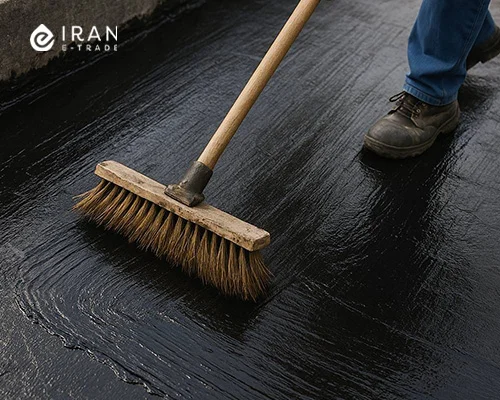
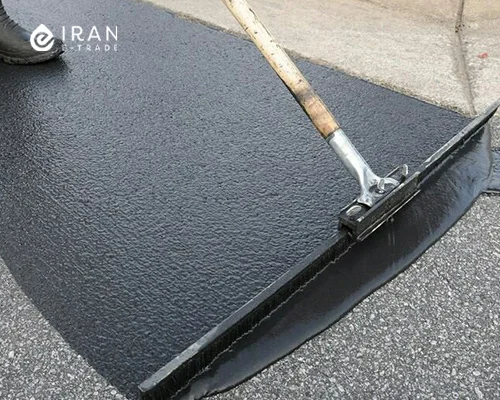
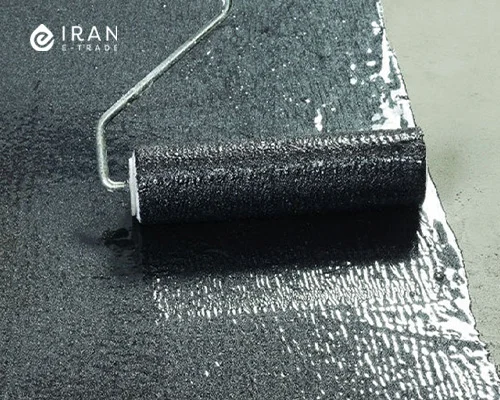
- Application Method: Depending on the project, apply the material using hot spraying, roller, trowel, or spraying with an appropriate nozzle.
- Curing and Monitoring: Control gelation/hardening time, service temperature, and initial loading, and validate performance through adhesion, permeability, and dynamic modulus tests.
Important Points in How to Use Nano Bitumen
Following proper application principles—such as temperature control, uniform dispersion, safety, material compatibility, and documentation—is essential for ensuring durability and stable performance.
To achieve repeatable results and long-term performance, make sure to observe these key execution points in how to use nano bitumen:
- Temperature Control: Avoid overheating, as it can cause chemical degradation or push viscosity beyond acceptable limits.
- Uniform Dispersion: Adjust mixing speed, duration, and energy input to ensure consistent particle distribution throughout the material.
- Safety and Environment: Handle nanoparticles in controlled environments using protective equipment, including masks, gloves, and proper ventilation.
- Material Compatibility: Test adhesion and compatibility on the actual substrate (concrete, metal, or old asphalt) to prevent delamination or cracking.
- Documentation and Quality: Record process parameters, test results, and environmental conditions so that any deviations can be promptly corrected during inspections.
Comparison of Nano Bitumen with Conventional Bitumen
Scientific studies show that nano bitumen, due to the presence of nanoparticles in its structure, offers significantly better mechanical and chemical properties than normal bitumen.
These modifications increase asphalt’s resistance to cracking, water penetration, and temperature fluctuations. While normal bitumen may perform worse under harsh climatic conditions or heavy loading, if the engineers know how to use nano bitumen with precise design, they can extend the service life of the structures.
From an economic perspective, the bitumen price of polymer nano bitumen also matters. Although its initial cost is higher, the long-term reduction in maintenance and repair expenses makes it a cost-effective option.
| Properties | Nano Bitumen | Normal Bitumen |
|---|---|---|
| Mechanical strength | High | Medium |
| Durability | Long | Limited |
| Water resistance | High | Normal |
| UV resistance | High | Low |
| Low-temperature flexibility | High | Low |
Advantages of Nano Bitumen
The advantages of nano bitumen include high durability, water repellency, and thermal stability—benefits that are fully realized only by following the principles of how to use nano bitumen.
One of its most important features is enhanced durability and stability under environmental conditions. Nano bitumen provides high resistance to rutting, reduced thermal cracking, reinforced water repellency, and stability against ultraviolet (UV) radiation.
These properties have significantly boosted the use of nano bitumen in civil and industrial projects, thanks to its ability to improve both the quality and lifespan of structures.
However, achieving these benefits is possible only when the scientific and practical principles of how to use nano bitumen are strictly followed, as uniform nanoparticle dispersion and precise temperature control during application play a critical role in its final performance.
What Is the Production Method of Nano Bitumen?
Producing nano bitumen involves blending base bitumen with nanoparticles such as nanosilica, nanoclay, or nanocarbon, using high-shear mixing, ultrasonic treatment, or compatibilizing agents.
These techniques ensure uniform particle dispersion within the bitumen matrix, creating a network that resists mechanical and thermal stresses.
Precise control of production conditions—such as temperature, mixing time, and additive proportion—is crucial for achieving the desired properties.
Ultimately, the quality of the final product depends on meticulous attention to detail and strict adherence to the scientific principles of how to use nano bitumen.
Disadvantages and Challenges of Nano Bitumen
The disadvantages and challenges of nano bitumen include high cost and sensitivity during application, which can be managed by following the principles of how to use nano bitumen and having a clear understanding of its applications.
Although nano bitumen offers numerous benefits, it also comes with certain challenges. High bitumen production process costs and the sensitivity of the mixing process are among its main limitations.
If engineers do not adhere to proper application practices, problems such as particle agglomeration, increased brittleness, or reduced adhesion may arise.
From an application standpoint, some projects may not easily benefit from this technology due to economic or technical constraints. Therefore, a thorough understanding of nano bitumen applications and careful management of execution risks are essential for successful use of this advanced material.
The main challenges of nano bitumen include its high production cost, the sensitivity of the mixing process, and the need for strict adherence to application principles. Ignoring how to use nano bitumen can result in issues such as particle agglomeration, reduced adhesion, or increased brittleness. Moreover, economic and technical constraints can limit its widespread adoption. Therefore, a thorough understanding of nano bitumen applications and careful management of execution risks are essential for the successful use of this advanced technology.
Frequently Asked Questions
In this section of the Iran ETrade blog, we address the most common questions about how to use nano bitumen:
What Is Meant by Nano Bitumen?
Nano bitumen is a type of modified bitumen that contains nanoparticles, offering greater strength, durability, and water repellency compared to conventional bitumen.
What Is the Difference Between Nano Bitumen and Conventional Bitumen?
Conventional bitumen is more susceptible to temperature and moisture changes. However, by knowing how to use nano bitumen, you can achieve significantly higher durability and performance compared to conventional bitumen.
Why Is Nano Bitumen Suitable for Civil Engineering Projects?
Nano bitumen is ideal because it provides higher thermal and mechanical resistance, extends the service life of structures, and lowers maintenance costs.
How Is Nano Bitumen Applied?
The substrate surface must be completely clean and dry, after which nano bitumen should be applied evenly using spraying or a roller.
What Is Spraying Nano Bitumen?
Spraying nano bitumen is a method for applying the material evenly over large surfaces, which improves application speed and coating quality.
What Are the Advantages of Nano Bitumen?
The key advantages of nano bitumen include resistance to cracking, high water repellency, thermal stability, and an extended service life for structures.
In Which Projects Is Nano Bitumen Used?
Nano bitumen is applied in road pavements, roof waterproofing, anti-corrosion coatings, and pipeline insulation. However, successful use depends on selecting projects based on environmental conditions and knowing how to use nano bitumen.
source: bitumenmag


- Bitumen Suitable for Hot Climates: Benefits + Key Technical Tips
- Petroleum Products and Petroleum Derivatives: Introduction + Uses
- Oil Refineries in Iran: Complete List + Comparison
- Gasoline Producing Refineries in Iran: 12 Major Refineries
- Largest Oil Producers in the World: The Top 13 Countries...
- The Largest Bitumen Refineries In The World: Top 20 Refineries...