Bitumen Suitable for Hot Climates: Benefits + Key Technical Tips
What is bitumen suitable for hot climates? Different climates require bitumen that is specifically designed for their conditions and performs better under varying climate conditions. Therefore, bitumen suitable for hot areas should have a higher softening point. Furthermore, it must resist deformation, UV degradation, and rutting.
Therefore, if you are a road or construction engineer, or you are working on a project in hot climates, you should choose bitumen suitable for them. For instance, selecting the right bitumen ensures better performance and durability in high temperatures. But why is it important to choose the best bitumen for hot climates? And what are its types and properties? To learn more, read this article from Iran Etrade blog, a reliable source for information on bitumen pricing and petroleum products.
Choosing bitumen suitable for hot climates is essential for the safety and durability of roads. Why? Because high temperatures and direct sunlight soften the asphalt, leading to rutting, depressions, and cracks. Therefore, the best bitumen for these regions has properties such as a high softening point, resistance to deformation and UV rays, strong adhesion to aggregates, and resistance to rutting. These types of bitumen include penetration-grade bitumen, polymer-modified bitumen, performance-grade bitumen, and blown bitumen. In addition, selecting the right bitumen, combined with a suitable asphalt mixture design and buying it from reputable supplier, increases pavement durability and reduces maintenance costs.
What Is The Importance of Choosing Bitumen Suitable for Hot Climates?
Choosing bitumen with a high softening point and thermal resistance helps maintain the shape and cohesion of asphalt at high temperatures. It can also prevent asphalt deformation and provide enough flexibility to withstand heavy traffic loads.
In hot climates, high temperatures and intense sunlight soften the asphalt much faster. Furthermore, the weight of vehicles and heavy traffic causes the asphalt to deform. As a result, this can lead to rutting, surface depressions, and cracking in the road.
That is why choosing bitumen suitable for hot climates is very important. Not only does it increase the durability of the road, but it also reduces maintenance costs and ensures safety and comfort for drivers.
In other words, investing in the right type of bitumen from the start is a cost-effective choice in the long term and reduces the technical and financial challenges of roads in the future.
Bitumen’s Behavior in High Temperatures
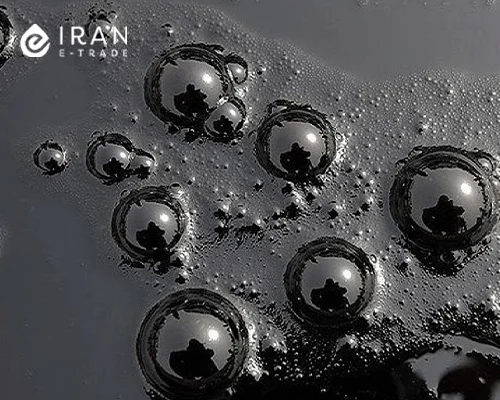
Why should you choose the best bitumen for hot climates? It’s because of bitumen’s behavior at high temperatures. At high temperatures, normal bitumen will soften and lose some of its solid form. That is why, if the bitumen is not designed for hot climates, it will deform more quickly. Consequently, this behavior reduces the bitumen’s ability to bind aggregates.
Therefore, if you want asphalt to perform well in hot areas, you should choose bitumen suitable for hot climates. But what are the properties of this type of bitumen that make it suitable for hot climates?
The Properties of Bitumen Suitable for Hot Climates
Different types of bitumen suitable for hot climates possess various properties:
- High softening point
- Resistance to deformation
- Resistance to UV radiation
- Strong adhesion to aggregates
- Resistance to rutting
1. High Softening Point
A bitumen with a high softening point increases the roads’ resistance to rutting and flow, helping reduce long-term maintenance costs and ensuring safety and comfort for drivers.
One of the most important properties of bitumen suitable for hot climates is its high softening point. Each bitumen has a specific softening point, which is the temperature at which it begins to soften and liquefy. This feature indicates the thermal resistance of bitumen and its ability to maintain shape and cohesion at higher temperatures.
In warm climates, high temperatures and sunlight can quickly soften bitumen with a low softening point. As a result, it cannot hold aggregates together, which leads to rutting and surface depressions, reducing the pavement’s durability.
Therefore, choosing bitumen with a high softening point for hot climates is very important because it can maintain its form in severe heat, prevent asphalt deformation, and thereby increase the pavement’s durability.
2. Resistance to Deformation
Resistance to permanent deformation is the bitumen’s ability to maintain its shape and withstand heavy loads and high temperatures. In this way, the asphalt will not develop surface depressions under the weight of vehicles and heavy traffic.
Therefore, this property is important for bitumen in hot climates, as high temperatures can soften bitumen. But without sufficient resistance, the pavement will deteriorate more quickly.
3. Resistance to UV Rays
UV rays reduce the longevity of bitumen and make it fragile. As a result, if the bitumen is not resistant to UV rays, the asphalt cracks faster and its durability decreases.
Moreover, when bitumen in hot climates is constantly exposed to sunlight, it must be able to retain its physical and chemical properties without weakening its structure or performance.
Therefore, resistance to UV rays is a key property of bitumen and is very important when choosing bitumen suitable for hot climates.
4. Sufficient Adhesion to Materials
The bitumen’s ability to adhere properly to materials in hot climates is essential. This is because high temperatures and environmental factors can weaken the bond between bitumen and materials.
Proper adhesion allows bitumen to hold aggregates firmly together and form a cohesive mixture that is resistant to deformation and traffic loads. As a result, the bitumen layer will not peel from the stones and will maintain the quality of the pavement.
However, without sufficient adhesion, the asphalt will quickly crack and degrade. Therefore, bitumen suitable for hot climates must have proper adhesion to materials.
5. Resistance to Rutting
Bitumen’s resistance to rutting means that when the road is subjected to heavy traffic loads at high temperatures, the bitumen will not rut or cause surface depressions in the asphalt.
Therefore, this property is important for bitumen in hot climates, as high temperatures can reduce its viscosity and increase the likelihood of rutting, which can compromise road safety and durability.
Assessing the Role of Bitumen Penetration and Grading in Hot Climates
Bitumen’s grading and penetration show its hardness and resistance at different temperatures. This property is particularly important in hot climates because harder bitumen with proper grading for high temperatures is less prone to softening.
As a result, asphalt made from bitumen suitable for hot climates does not deform under heat or traffic loads and increases the road’s durability.
Different Types of Bitumen Suitable for Hot Climates
We now know more about the properties of the best bitumen for hot climates. Moreover, let us see what its different types are. These types of bitumen have different gradings, and their uses vary depending on the grading.
1. Bitumen with Low Penetration Grade
Low-penetration-grade bitumen is suitable for hot climates. This type of bitumen is harder, so the standard needle for the penetration test penetrates it to a lesser extent, showing its resistance to softening at high temperatures.
Furthermore, low-penetration-grade bitumen is suitable for asphalt production in hot climates because it is less prone to deformation under heat. As a result, road workers and engineers usually use penetration-grade bitumen for building roads.
60/70 Bitumen
Using 60/70 bitumen not only increases the pavement’s durability, but also reduces long-term maintenance costs and ensures the quality of civil engineering projects in hot climates.
60/70 bitumen is suitable for hot climates and is a type of prime coat bitumen with low to average viscosity. It can also penetrate the pores of materials effectively, which allows it to cover the lower layers of the pavement or materials in a cohesive manner and increase their resistance to water and humidity.
By penetrating the lower layers of asphalt, 60/70 bitumen creates a solid and durable layer that prevents peeling and ensures strong adhesion. As a result, 60/70 bitumen is an important material in road construction.
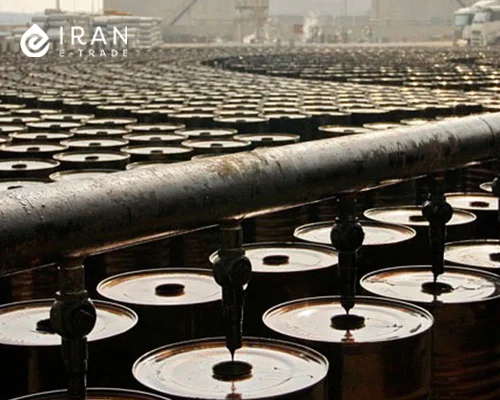
40/50 Bitumen
Using 40/50 bitumen not only increases the road’s durability, but also reduces long-term maintenance costs and ensures driver safety.
Moreover, this bitumen is suitable for hot climates and is a semi-hard penetration-grade bitumen. It is also classified according to international ASTM and AASHTO standards, and its number (40/50) indicates its penetration level and relative hardness.
40/50 bitumen is balanced between hardness and softness. Therefore, in high temperatures it is less prone to softening, and in low temperatures it maintains its flexibility. As a result, it can endure different climate conditions.
Furthermore, these properties make 40/50 bitumen suitable for hot and humid climates. As a result, 40/50 bitumen is a reliable product to use as a bonding material in road construction and pavement.
50/70 Bitumen
This type of bitumen is a prime coat bitumen, classified according to international ASTM and AASHTO standards. 50/70 bitumen has higher heat resistance than softer bitumen and is less likely to soften at high temperatures.
Therefore, in hot climates where asphalt is exposed to intense sunlight and heat, 50/70 bitumen performs better. In addition, 50/70 bitumen has sufficient flexibility to withstand temperature changes between day and night, as well as traffic loads, which reduces the possibility of rutting, cracking, and pavement degradation.
As a result, 50/70 bitumen is a good choice for road construction in hot and humid areas. Using it can significantly increase the durability, stability, and safety of asphalt.
2. Polymer Modified Bitumen
A type of bitumen suitable for hot climates is polymer-modified bitumen. Bitumen manufacturers improve its quality by adding polymers such as SBS or EVA, to improve its performance compared to normal bitumen.
As a result, polymer-modified bitumen has greater elasticity, a higher softening point, and better resistance to cracking and deformation. Moreover, it is suitable for use in hot climates and on roads with heavy traffic.
3. PG Bitumen
Performance grade, or PG bitumen, is categorized based on its performance at high and low temperatures to make it suitable for use in different climate conditions and under varying traffic loads.
Moreover, PG bitumen is resistant to softening in heat and cracking in cold weather, and its application increases the durability and lifespan of the pavement.
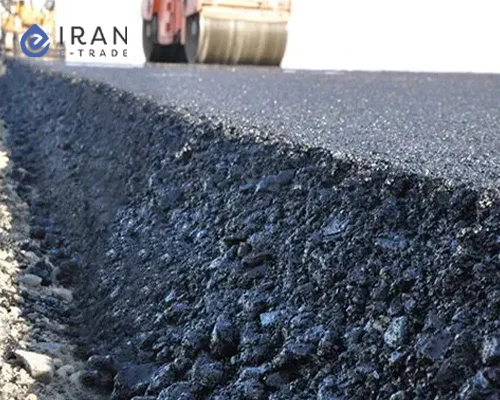
4. Blown Bitumen
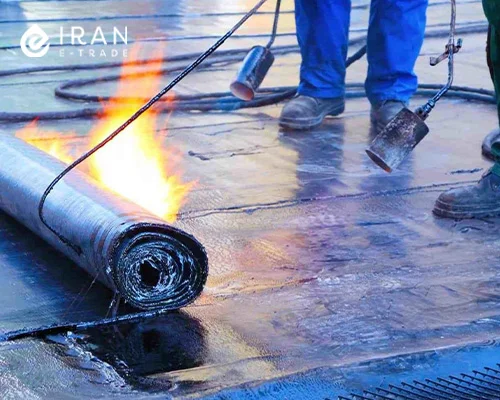
Using blown bitumen is important in hot climates. This is because it is heat-resistant and has dimensional stability. As a result, it performs better under different weather conditions and is suitable for industrial uses and waterproofing.
A type of bitumen suitable for hot climates is blown bitumen, which manufacturers produce by blowing air into bitumen at high temperatures. Therefore, blown bitumen is harder, has a higher softening point, and is less permeable than normal bitumen.
Assessing the Effect of Climate Conditions on Asphalt Durability
Climate conditions such as high temperatures, sunlight, humidity, and soil can reduce bitumen’s adhesion to aggregates and cause it to peel off. Consequently, this reduces asphalt durability and accelerates pavement degradation. Therefore, many road workers and engineers use bitumen suitable for hot climates in road construction.
Difference Between Normal and Polymer Modified Bitumen in Hot Climates
In hot and warm areas, polymer-modified bitumen is more resistant to heat and deformation due to the addition of polymers and other substances. Therefore, it increases asphalt stability. In contrast, normal bitumen softens faster at high temperatures, is more prone to rutting or deformation, and has lower durability.
What is the Importance of Proper Asphalt Mix Design?
Even if you procure bitumen suitable for hot climates, it is essential to pay close attention to the proper structure of the asphalt mixture. This is because even with the best bitumen, if the ratio of bitumen to aggregate, its gradation, and compaction are not properly controlled, the asphalt will not have sufficient resistance to high temperatures and rutting.
Therefore, in hot regions, the asphalt mixture must be designed to provide adequate flexibility to prevent cracking while resisting deformation.
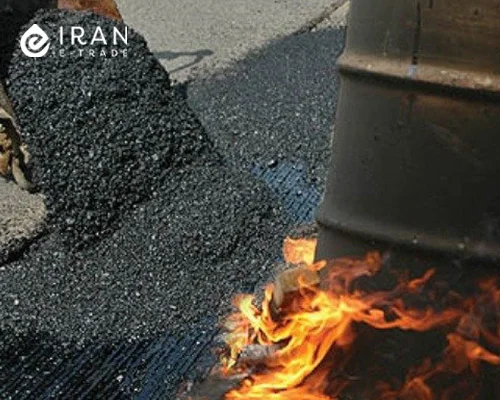
The Role of Heavy Traffic in Selecting Suitable Bitumen for Hot Climates
On routes with heavy traffic, repetitive loading and high pressure increase the stress on the asphalt, so the bitumen must be able to withstand these loads. As a result, if you do not select bitumen suitable for hot climates, the asphalt will rut and deform more quickly, reducing the pavement’s durability.
Common Mistakes in Selecting Suitable Bitumen for Hot Climates and Their Consequences
When selecting the best bitumen for hot climates, you may make the following mistakes, so it is important to be aware of them in advance:
| Selecting bitumen based solely on price | The quality and technical properties of bitumen—such as resistance to temperature and traffic loads—determine the durability and performance of asphalt. If you choose a low-cost but low-quality option for your project, you may end up facing high maintenance costs. |
| Using soft bitumen in very hot regions | At high temperatures, this type of bitumen softens and deforms quickly, which leads to rutting and reduces asphalt durability. Therefore, you should avoid using soft bitumen in very hot regions. |
| Ignoring heavy traffic | Repeated and heavy loads cause rutting and deformation in asphalt, and the bitumen must withstand these stresses. Therefore, when selecting bitumen, you must consider the amount of traffic on the road. |
| Not testing bitumen before use | The actual technical properties of bitumen, such as its’ softening point and thermal resistance, determine its performance in hot regions. Without testing, you increase the risk of choosing unsuitable bitumen and reducing asphalt durability. |
If you do not select bitumen suitable for hot climates, the asphalt will deteriorate quickly, leading to high maintenance costs for your project and may even compromise road safety. Therefore, always choose bitumen based on your project conditions and technical analysis, not just on price or availability.
Importance of Choosing a Reliable Supplier in Selecting Suitable Bitumen for Hot Climates
Purchasing bitumen from a reliable supplier plays a crucial role in obtaining bitumen suitable for hot climates. For instance, a knowledgeable supplier understands the climatic conditions and project requirements.
As a result, they recommend high-quality and appropriate bitumen, helping you avoid costly mistakes. Therefore, working with such a supplier, along with technical analysis and expert consultation, ensures your project’s success.
Frequently Asked Questions
You may have the following questions about the best bitumen for hot climates:
Which Bitumen Is Best for Hot Climates?
Polymer-modified bitumen (PMB) or PG 82-22 grade bitumen are suitable for hot regions because they have a high softening point and remain flexible at high temperatures. As a result, these properties help asphalt resist heat and deformation, thereby improving road durability.
Is Oxidized Bitumen Used in Road Construction?
Oxidized bitumen is mainly used for insulation and industrial applications. Therefore, it is not suitable for road construction. Instead, road pavements typically use prime coat or penetration-grade bitumen.
How Does PMB Compare with Penetration Grade Bitumen?
PMB offers higher thermal resistance and greater elasticity compared to penetration-grade bitumen, and it performs better in high-stress environments. Therefore, asphalt made with PMB undergoes less deformation and cracking.
How Does Bitumen Behave at High Temperatures?
At high temperatures, bitumen softens and partially loses its solid properties, which may prevent it from properly holding aggregates and may cause asphalt deformation. This behavior increases the risk of rutting and asphalt flow. Therefore, it is crucial to select and use bitumen suitable for hot climates.
source: publtd


- How to Use Nano Bitumen: Properties & Applications + Method...
- Petroleum Products and Petroleum Derivatives: Introduction + Uses
- Oil Refineries in Iran: Complete List + Comparison
- Gasoline Producing Refineries in Iran: 12 Major Refineries
- Largest Oil Producers in the World: The Top 13 Countries...
- The Largest Bitumen Refineries In The World: Top 20 Refineries...